Showing posts with label Michael Lee West. Show all posts

Monday, November 7, 2011

Gone with a Handsomer Man Combines Good Cooking & Good Southern Story Telling

Imagine coming home to find your husband-to-be gallivanting around the backyard semi-nude with not one, but two women. That's exactly the predicament Teeny Templeton finds herself in. No one could blame her for what happened next: an attack by peaches. Peaches were simply the closest weapon to her, hanging as they were on a nearby tree.

In a bout of ridiculousness, Teeny is arrested and faces criminal charges for assault, although, if you ask me, the only thing hurt on her good-for-nothing fiance Bing was his pride. Kicked out of her own home by a judge granting an order of protection (to keep Bing from being pelted by fruit again, one presumes), she turns to her Bing's aunt Dora. Unfortunately for Bing, Teeny has always been a favorite of Dora's. With her help, Teeny moves out of Bing's house and into a grand old mansion his family owns.

Things turn from bad to worse when Bing turns up dead. Teeny, of course, becomes suspect number one. After she runs into an old flame from back home in Georgia who just so happens to be a lawyer, Teeny fights the charges against her. Coop tries to help Teeny out of her mess, while maintaining a professional distance from their past.

In Michael Lee West's latest novel, Gone with a Handsomer Man, she returns to those things she does best:
  • the south, Charleston in particular
  • food, with Teeny's interest in (and almost obsession with) baking
  • a gothic quality
West describes Charleston and its outlying islands with aplomb and grace. I adore a well-written southern novel, and Michael Lee West delivers once again in this latest effort. Teeny and cast are caricatures of southern characters, drawn with bold strokes on the page. Dora, especially, is the epitome of a fine southern lady, laced with bourbon and lined with steel. Both the old family mansion south of Broad and Coop's island cottage are dwellings worthy of their Charleston setting.

One of Michael Lee West's ongoing themes in her novels is food. She even wrote a memoir based on her hereditary food obsession, Consuming Passions. Food has factored into all of her books, but perhaps none so much as Gone with a Handsomer Man, in which Teeny bakes both for money and for sanity. In flashback scenes, Teeny also recalls childhood moments in which her mother whipped up poisonous recipes to deal with her own demons.

Both the setting and the baking-with-poison lend the novel a southern gothic quality. Michael Lee West novels are never sunshine and cupcakes; she inserts a healthy dose of real life, in this case via Teeny's dubious dealings with her mother and subsequent difficulties as an adult. Somehow cooking especially always has an underlying desperation and murderous quality in West's books. In She Flew the Coop, the main character lies in a coma "after drinking pop laced with rose poison," and in Mad Girls in Love, southern belle Bitsy attempts to kill  her husband with "a frozen slab of ribs that she purchased at the Piggly Wiggly."

Gone with a Handsomer Man is a satisfying addition to West's bevy of southern novels. The best news? When I met her at the Southern Festival of Books in October, West shared the news that a sequel starring Teeny will be published soon. I can't wait to find out what else is in store for Teeny after the surprise ending of this novel.

Michael Lee West is the author of five other novels and one recipe-laden memoir. To find out more about her, visit her website or her blog. You can also find her on Facebook and Twitter. West explains how her vision of Teeny came during a trip to the Low Country here. An excerpt of Gone with a Handsomer Man, as well as an array of Teeny's recipes can be found on  by clicking here. To connect with Teeny herself, visit The World According to Teeny, a great character blog full of recipes, sneak peeks, giveaways, and more.

Friday, June 26, 2009

Foodie Writings


I love good mixtures -- chocolate cake & ice cream, a hot day & the pool, a rainy day & a good book... One of my favorite "mixtures" is the pairing of books & food. In essence, the "foodie book." To some people, this may sound really boring. However, given the large number of Food Network viewers, I will have to say that I'd say more people are interested in reading about food than ever before. I wanted to share some of my favorites so that you can also enjoy these excellent pairings:

The Food of a Younger Land : A Portrait of American Food -- before the national highway system, before chain restaurants, and before frozen food, when the nation's food was seasonal, regional, and traditional -- from the lost WPA files by Mark Kurlanksky

I am currently only about a third of a way into this book. It's something I picked up from the "new books" shelves of my local library with a passing sort of interest. I'm reading a couple of other things right now, including a great Michael Connelly mystery. This book seemed like something I could pick up & put down in between the mystery-solving pages of Connelly's tortured LAPD detective Harry Bosch & his rather depressing life/ case. I was wrong -- not because you couldn't do that with this book, but rather because I'm not letting it get out of my hand. Although never a history buff, and usually not a non-fiction reader, this history of food in America is fascinating. Kurlansky begins his compiled articles and recipes with an introduction. Now, let me preface this by saying that I usually skip introductions. Most of them are boring & unneccessary for the greater understanding of the books they introduce. However, because I wanted to know what I was getting myself into (and technically, what in the world it was about -- despite the rather long & descriptive title), I started with the introduction this time. Kurlansky pulled me in with his never-boring historical telling of Roosevelt's efforts to stimulate the Depression-era economy. Roosevelt included something in his plan which I can't see flying today, despite our own economy's similarities to that time period. He gave money to the arts! Roosevelt signed a bill creating the Works Progress Administration (which I had never heard of -- how do they leave these things out in school?!?). According to Kurlansky, the WPA
was charged with finding work for millions of unemployed Americans. It sought work in every imaginable field. For unemployed writers the WPA created the Federal Writers' Project, which was charged with conceiving books, assigning them to huge, unwieldy teams of out-of-work and want-to-be writers around the country, and editing and publishing them. . . . Katherine Kellock . . . came up with the thought of a book about the varied food and eating traditions throughout America, an examination of what and how Americans ate. . . . Kellock called the project America Eats. (1-2)
The book was never published, due to funds being cut -- that and a little thing called World War II, which switched America's focus from the Depression & its aftermath to Germany and Japan. Kurlansky found the old files in piles in the U.S. Library of Congress and began sorting through the entries sent from all over the United States.

So far, I have learned everything there is to know about clam chowder in all its forms (with tomato or without? with rich cream or broth?). I've learned about the molasses trade and how that shaped Boston baked beans & brown bread. I've just started the section on the south and a piece entered by Eudora Welty, a Federal Writers' Project employee in the 1930s. Kurlansky touts it as "mimeographed pamphlet that she wrote for the Mississippi Advertising Commission . . . . [and] possibly Welty's only peice of food writing" (101). It is fascinationg reading, as an English major who worshiped Welty's short stories and read the novels of southern writers who list her as inspirations in their careers.


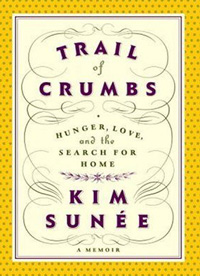
Trail of Crumbs: Hunger, Love, & the Search for Home by Kim Sunee

I thought I had already written about Kim Sunee and her food-obsessed life in an earlier blog devoted to good books I'd read lately. Apparently not... Therefore, I will definitely include it here. This is a must-read included in this list because of its relation to the topic. While the book is a memoir of Sunee's life so far, it is also about her relationship with food.

Sunee was adopted from Korea as a toddler. She went from the food-steeped atmosphere of a Korean market where she was abandoned to the city of New Orleans, rich in its own food history. In this way, she becomes a life-long food lover, interested in both her roots and her new family's traditions. She includes recipes in her memoir, which actually reads as a novel. Which foods does she choose, you might ask? A little bit of everything. She provides readers with a Quick-Fix Kimchi from her native land, followed by a complicated recipe for her Louisiana grandfather's Crawfish Bisque.

Later in life, Sunee expands her culinary repertoire to include French cuisine. Sunee lives for many years in Florence and Paris, where she learns to cook elaborate dinners for her boyfriend's friends and family. Cream of Chesnut Soup, Chicken Thighs with Cinnamon and Dates, Figs Roasted in Wine, crepes, salads, chilled fruit soups... The list goes on and on of new recipes she culls from the people and land surrounding her.

The story is one of searching -- Sunee searches for her home, for her place in the world. And throughout this search, food remains her steadfast anchor. No matter the land, Sunee finds that she can create "comfort" and "home" by pouring her soul into dishes she and her loved ones enjoy experiencing -- tasting, smelling, etc. There is no true conclusion (Sunee won't turn 40 until next year!), but one thing is for sure -- we gain a lot as readers just from the many recipes Sunee shares with us. Click here to read Sunee's blog and continue to experience her food-soaked days in cities around the world. Sunee includes both experiences, reader writings, and recipes.


Consuming Passions: A Food-Obsessed Life by Michael Lee West

West is one of my favorite southern writers. She is famous for her novels, including Mad Girls in Love and American Pie. However, she also wrote this book, a memoir-style ode to food. It is a recipe-laden book which includes recipes from funerals and church potlucks. It also reads as one of West's novels, full of interesting characters and southern tales. The only difference? These stories are true & the characters are West's family members. Drink some sweet tea and enjoy!

Saturday, January 17, 2009

Books, Part 2: Skinny Dipping, Sitting in Airports, and Lots of Southern Ambiance


Here is the follow-up to my last blog listing good books I've read lately. This only includes books from last fall & winter. The newest books I have read will have to be reviewed at some point later in time...


  • Skinny Dip by Carl Hiaasen: Hiaasen writes books set in his native Florida, and they are every bit as hot and intriguing as you might discern simply from the setting. In this novel, Hiaasen returns to the loveable rebel Mick Stranahan, who began his literary life in Hiaasen’s book Skin Tight. This time, Mick rescues the beautiful Joey Perrone after her sleaze of a husband Chaz tosses her off a cruise ship. As Mick and Joey plot their revenge against Chaz, a whole host of winning characters become intertwined with the plot and lend a wonderful humor and depth to the story. The villains are bad (and bad at being bad), the good guys win, and everybody ends up happy. I recommend this and any other Carl Hiaasen book, particularly the first Mick Stranahan story. However, Skinny Dip works perfectly well as a stand-alone work, as well.
  • Clay's Quilt by Silas House: House’s beautiful novel set in the Kentucky coal hills follows the life of Clay Sizemore. While Clay is a good ol’ country boy, his life is anything but boring. His mother was killed when he was five, his aunt who raised him sees visions, and his love interest Alma has recently escaped a violent marriage. House’s writing would be enough without an excellent plotline, but together the two are magical. Read this (one of my favorite novels of all time), as well as the two other companion novels that center around the Sizemore family at various times from the 1800s to Clay’s present day: A Parchment of Leaves and The Coal Tattoo.
  • House and Home by Kathleen McCleary: In this debut novel, McCleary introduces readers to the flawed but lovable Ellen Flanagan. Ellen is in the middle of several life changing events when the novel occurs. She is in the middle of a divorce from her long-time husband and father of their two young girls. She is also in the middle of selling their family’s house because they can no longer afford it after her husband’s money-losing inventions and her own opening of a coffeeshop. In the novel Ellen develops a relationship with the new buyer’s husband, as well as a hatred for the wife. She cannot stand the thought of anyone moving into her lovingly painted and decorated home, and she goes to great lengths to stop them from doing so. Hopefully, this is the beginning of many more beautifully written novels to come from new author Kathleen McCleary.
  • Dear American Airlines by Jonathan Miles: Miles has taken on a large project in his novel Dear American Airlines, but it is not more than he can handle. The novel is written in the ambitious style of a(n extremely long) letter. To – of course – American Airlines. The protagonist Bennie Ford is stuck, along with several thousand other passengers, in Chicago’s O’Hare Airport. It is the eve of his only daughter’s wedding, and as a result of some plane delays, he is not going to make it. As Ford sits in the airport, he pens this rant to the airlines, asking for a refund and then explaining why he – more than the other passengers he is sure will request the same – deserves one. Ford goes backwards and forwards in time, sometimes narrating his current surroundings in the airport and at other times relating his life up until this point. Ford’s regrets are many, and he tells the airline (and therefore, the reader) about them all: his mother, a mentally ill woman in the last stages of her life; his relationship with his daughter’s mother, with whom he fell deeply in love with in New Orleans; his lack of participation in his daughter’s life; and most profoundly, his alcoholism which is to blame for it all. Miles manages to present Ford as a character whom the reader feels for, rather than a character the reader hates, in spite of his many mistakes. It is a poignant first novel from an author I hope to read a lot more of in the future.
  • Truth & Beauty: A Friendship by Ann Patchett: In this seamlessly written “love story” for her best friend, Ann Patchett describes the late author Lucy Grealy and their twenty year relationship. At times hilarious and at times tear-jerking, Truth & Beauty is the most real account of female friendship that I have ever experienced in book form. Neither Patchett nor Grealy are perfect friends; they hurt each other, they hurt themselves at times, and they feel real emotions – jealousy, admiration, love, pride. Grealy is presented as an immensely talented but fatally flawed character; in other words, a human being. Patchett loves Grealy, supports her, but ultimately cannot save her, as none of us can save anyone else. While Grealy’s sister and family took issue with Patchett’s supposed “capitalizing” on both her friendship with Lucy and her untimely death, I felt that Patchett wrote this as part of a grieving that she couldn’t do any other way. I also felt that her written tribute was the only tribute that she had inside her to give to Lucy, given the importance that writing had been in both their lives. It is a moving work that I gave to my mother as soon as I finished. I pressed it into her hands, saying simply, “Read this. You have to.”
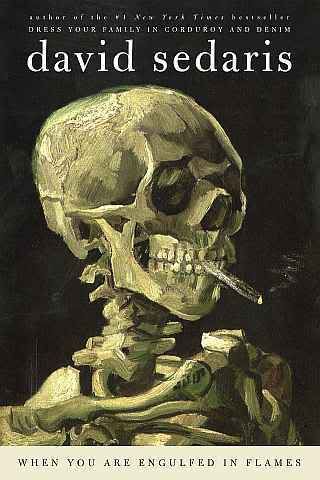
  • When You Are Engulfed in Flames by David Sedaris: In satirist David Sedaris’ latest set of essays/stories, he continues to make you both laugh and cringe at the hilarity of his own life. Some pieces in the book “spoke” to me more than others; for example, Sedaris writes a lengthy piece about an elderly neighbor who he ends up spending more time than necessary with; they become “friends” in a love-hate sort of way. Half the time, she makes him and his partner dinner (almost all of which he describes as inedible), and the other half of the time they are yelling obscenities at each other. This piece is Sedaris at his best: hilarious, real, but honest and at times heartbreaking. Towards the end of the book, he goes off on a self-indulgent tangent which I didn’t particularly enjoy, primarily about his time spent in Europe. All in all, however, an excellent read from a wonderful speaker who also translates well into the written word.
  • sTori Telling by Tori Spelling: The infamous Tori Spelling tells her side of the story in this autobiography. Beginning with her childhood and going to present-day, Spelling tells readers her version of the much-publicized life she has lived thus far. While much of the money tales are true (think snow machine in Hollywood at Christmas so that she and her brother could sled), Spelling also clears the air on everything from her estranged relationship with her mother and her infidelity during her first marriage. While admitting her own faults, Spelling also explains her feelings during various tabloid times in her life, from 90210 to her father’s death and her mother’s outspoken insults. As a fan of 90210 and Tori and Dean: Inn Love, I very much enjoyed Spelling’s comedic version of her life. As a human being, I sympathized with her for the hurts she has endured in life and the public eye being always on her. I think that people reading this book will find a different Tori Spelling than the one they make fun of; they might even like her – even if they don’t ever watch her reality show.
  • Olive Kitterige by Elizabeth Strout: Strout writes a unique novel-in-short-stories in her newest title Olive Kitteridge. Olive is a schoolteacher in a small fishing town in northern Maine. She is brash and heavyset and, in many ways, unlikeable. She is seen in each of the various stories, sometimes as the main character and sometimes only as a peripheral character or in a brief mention. Through these stories, however, Strout shows us some surprising qualities to Olive Kitteridge, and in the end she becomes a character worthy of our sympathy. I did not enjoy Strout’s first novel, the much-lauded Amy and Isabelle. This novel was both depressing and uplifting all at the same time. It was also an enjoyable read, written with skill and expertise. I look forward to Strout’s next effort after two very different novels.
  • Mermaids in the Basement by Michael Lee West: West outdoes herself in her latest southern female fiction masterpiece. Known for her slightly eccentric but always delightfully colorful characters, West delivers in her newest work. Renata is a movie-script writer whose director lover has just made tabloid headlines with his latest leading lady clutching his thigh in a London bar. Renata flees to her grandmother’s estate on the Alabama Gulf Coast, a deep south where the moss hangs from the trees and cocktail hour is held nightly. There Renata learns from her grandmother and her grandmother’s cast of crazy friends the “real” story behind her mother and father’s tumultuous marriage and divorce. In the process, Renata learns something about herself and attempts to mend her estranged relationship with her father. Michael Lee West is right on target, as usual, with both her plotline and her dialogue, both dripping with sweet iced tea and spiked with horseradish from the shrimp cocktail sauce.
  • The Story of Edgar Sawtelle by David Wroblewski: Wroblewski is a new writer about whom everyone is abuzz. His debut novel, Edgar Sawtelle, has received rave reviews from everyone from the New York Times to Amazon.com. Wroblewski sets his modern-day retelling of Shakespeare’s Hamlet in the forestland of Wisconsin. The title character is a mute-from-birth whose family raises a specially-engineered new breed of dogs called Sawtelles. Edgar must face his own demons, as well as his uncle Claude in this fabulous story. Playing the part of Ophelia is one of Sawtelles, a house dog named Almondine. Complete with ghostly visitors and family secrets, Wroblewski’s novel is a masterpiece everyone should experience.

LinkWithin

Related Posts with Thumbnails