Showing posts with label Foodie Writings. Show all posts

Saturday, May 19, 2012

Weekend Cooking -- Weeknights with Giada: Quick and Simple Recipes to Revamp Dinner

Giada De Laurentiis is Food Network's tiny Italian fireball -- small in stature, but on fire in the kitchen. Her large personality fills the television screen each week during her latest cooking show Giada at Home, where she cooks delicious eats for her friends and family. She is also a coach for this season's Food Network Star, which debuted last Sunday.

Although primarily an expert in Italian food, Giada also throws other foods into the mix at times. Her newest cookbook, Weeknights with Giada: Quick and Simple Recipes to Revamp Dinner delivers exactly what it promises. Recipes with ten ingredients or less that busy families can cook during the week. As in her television show, Giada focuses on Italian, but includes a section titled "Change of Pace" where she features Asian, Spanish, and Greek cuisine, as well.

While included are photographs of Giada's food and family, the meat of this cookbook are the recipes themselves. This is not an ode to a television star, but a real cookbook that real people can use. Weighing in at 240 pages, there is a recipe for everyone in this cookbook. Giada divides the recipes in Weeknights with Giada into some basic sections (i.e., "Veggies & Sides" and "Dessert") but also some more innovative, personalized sections such as the aforementioned "Change of Pace" or "Breakfast for Dinner."

Several of the recipes from Weeknights with Giada will make it onto my table this summer, as they simply sound like warm-weather treats. I can't wait to make a version of Giada's Caramelized Onion, Chicken, and Grapefruit Salad, which sounds big on flavor without including soft cheeses. Finds like that are a plus for me as a pregnant woman struggling to enjoy salads without feta, bleu cheese, or some other forbidden-during-pregnancy cheeses. (The delicious-sounding Fig and Brie Panini will just have to wait until after October!) The Apricot Oat Bars (using both apricot preserves and dried apricots for ease and simplicity) sound like perfect summer-month treats, or even breakfast.

However, my instinct is to turn immediately in Weeknights with Giada to the "Pasta and Grains" section. Not only because Giada's Italian expertise makes this a no-brainer, but because I am a pasta lover. I could eat it almost every night (whole wheat, of course), but I get tired of the same old ingredients and preparations. Giada includes several easy, new takes on pasta that I'll be trying. Penne in Almond Sauce, for instance, which includes shredded rotisserie chicken, frozen peas, lemon, and basil, sounds delicious. So does the Sweet Corn and Basil Lasagna, the recipe for which you can find on Amazon's page for Weeknights with Giada.

The recipe I will probably make first, however, is one of the most simple. It just speaks to me for some reason:

Wagon Wheel Pasta with Pancetta and Peas, 

Photo from Weeknights with Giada
1 lb wagon-wheel shaped pasta
1/4 c plus 1 T olive oil
8 oz pancetta (for which I will probably substitute bacon, as pancetta isn't readily available where I live)
2 large or 4 small shallots, chopped
1/2 c low-sodium chicken broth
1 1/2 c sugar snap peas, cut into 1-in pieces
1 1/2 c shelled edamame beans
1 c frozen peas, thawed
1 c grated Parmesan
1 t kosher salt
1/4 t freshly ground black pepper
1/4 c chopped fresh mint leaves

Bring a large pot of salted water to boil over high heat. Add the pasta and cook until tender but still firm to the bite, stirring occasionally, 8 to 10 minutes. Drain and reserve about 1 cup of the pasta water.

In a large skillet, heat 1 tablespoon of the oil over medium-high heat. Add the pancetta and cook, stirring frequently, until golden and crisp, 6 to 8 minutes. Using a slotted spoon, remove the pancetta and drain on a paper towel-lined plate. 

Add the shallots to the pan and cook until soft, 2 to 3 minutes. Add the broth and scrape up the brown bits that cling to the bottom of the pan with a wooden spoon. Stir in the snap peas and simmer for 2 minutes, until tender.

Add the pasta, cooked pancetta, edamame, petite peas, Parmesan cheese, the remaining 1/4 cup olive oil, the salt, pepper, and mint. Toss until coated, adding the reserved pasta water, 1 tablespoon at a time, as needed to loosen the sauce. Transfer to a bowl and serve.

This is a post part of the Beth Fish Reads blog series Weekend Cooking, which is open to anyone with a food-related post, including: book and movie reviews, photography, recipes, and other items. To browse this week's posts from all over the web, click on over to her post from today, about the book Farmers' Markets of the Heartland

Saturday, May 5, 2012

Weekend Cooking: Gumbo Tales: Finding My Place at the New Orleans Table

New Orleans is my home away from home. I've been visiting since I was in high school, and frequently bring it up hopefully if friends or loved ones are trying to decide on a getaway. My husband and I went over this year over spring break; he had been wanting to plan a trip on a train, and I am always plotting to get to New Orleans.

This trip had been a long time coming. I went to New Orleans no fewer than a dozen times between 1997 and 2005. My friends and I went weeks before Katrina hit in 2005, but I hadn't been back until this year. Some people's memories of New Orleans are tied exclusively to partying on Bourbon Street, catching beads and drinking out of yard-long hurricane glasses. Mine are exclusively tied to food.

New Orleans introduced me to Cajun and Creole foods I'd never tasted before. I now count red beans & rice, gumbo, and etouffee among my favorite dishes. It also opened up a whole new realm of seafood: tuna steak and boiled crawfish, in particular. I recall eating crawfish by the five-pound tray on the shores of Lake Ponchairtrain, indulging in a stuffed artichoke at a Italian restaurant in Metairie, and inhaling beignets at Cafe Du Monde in the French Quarter.

Before we left, I decided I needed some New Orleans reading to get me ready for our trip. I downloaded several Kindle samples, but ultimately bought Sara Roahen's Gumbo Tales: Finding My Place at the New Orleans Table.

Roahen's book details her life as a transplant from Wisconsin who moved to New Orleans as a food writer. To almost anyone, much of New Orleans cuisine would seem odd. To a Midwesterner, raised on eggs, meat, and cheese, the food was even more foreign.

In Gumbo Tales, Roahen introduces readers to the foods that make New Orleans unique from the perspective of an outsider. She discusses the ins and outs of each food, sharing where and when she first experienced the dish, and writes about the tastes, textures, and smells with exquisite detail. She offers restaurant choices and specific home cooks whose versions of the dishes she raves about are worthy of deep praise. She also details her own forays into cooking the dishes, although her recipes are missing from the book.

Among the New Orleans foods she describes are gumbo, po-boys, king cake, red beans & rice, crawfish, stuffed artichokes, and chicory coffee. She relates meals both grand and not-so-grand (but delicious), from Galatoire's to shopping strip holes-in-the-wall.

Although Gumbo Tales lacks recipes, Roahen offers her own versions of New Orleans favorites on her website. Send her an email, and she'll send you some recipes! She also offers a large array of photographs linked to specific chapters in her book. Explore those for some mouth-watering pictures of food, plus plenty of New Orleans city shots, as well.

After finishing Gumbo Tales, I'm itching to go back and explore some of the restaurants Roahen describes. Let's be honest: anything for a return trip to New Orleans!

Sunday, February 19, 2012

Tender at the Bone: Growing Up at the Table Shows Ruth Reichl's Life as a Complicated Series of Meals

Although most people wouldn't think twice about a food critic's background, Ruth Reichl's life is the stuff that makes for interesting reading. Much more than a foodie memoir, Reichl's look at her early life from childhood to her first job as a food writer wears many hats.

Tender at the Bone: Growing Up at the Table is a biography of a poor little rich girl, one who was sent off to boarding school and sailed off to Europe. It is also the story of a hippie living freely in the 1970s, shocking society with her blindness to skin color and normal conventions. It is the story of a child dealing with a parent with mental illness. It is the story of a girl learning to cook first at home (disastrous), then at her father's first wife's mother's house (yes, you read that convoluted relationship correctly). It is also the story of a food writer in the making.

While Reichl came from some degree of wealth, her tone is never pretentious. Instead, she writes candidly about her life in New York City and about her mother's madness, which colored every day of her life. She forgoes some of the privilege she enjoyed as a child in order to escape for periods of time: to the University of Michigan for college, to Europe as a newlywed, to Berkeley as a commune-living chef. 

Reichl's relationship with food is a constant in her life, from the molded hors d'oeuvres her mother serves at parties to the wine she tastes in Europe on a buying trip with her local wine seller. Food is more than just food to Reichl; instead, it is a part of her life she can control, one that she can depend on. It is perhaps the thing she relies on the most, the ability of food to please and to comfort as long as one uses fresh ingredients and treats them well.

Often foodie memoirs are not noted for their literary merit, but Reichl manages to both write about her life and food and to do it extremely well. The pages of Tender at the Bone are sprinkled with well-tested recipes, but Reichl's true ability is in her impeccable word choice, her ability to write prose about food and make it sound like poetry. 

THE SWALLOW'S PORK AND TOMATILLO STEW

1/4 c vegetable oil
8 cloves garlic, peeled
2 lbs lean pork, cut in cubes
Salt
Pepper
1 bottle dark beer
12 oz orange juice
1 lb tomatillos, quartered
1 lb Roma tomatoes, peeled and chopped
2 large onions, coarsely chopped
1 bunch cilantro, chopped
2 jalapeno peppers, chopped
1 14-oz can black beans
Juice of 1 lime
1 c sour cream

          Heat oil in large casserole. Add garlic cloves. Add pork, in batches so as not to crowd, and brown on all sides. Remove pork as the pieces get brown and add salt and pepper.
          Meanwhile, put beer and OJ in another pot. Add tomatillos and tomatoes, bring to a boil, lower heat, and cooke about 20min or until tomatillos are soft. Set aside.
          When all pork is browned, pour off all but about a tablespoon of the oil in the pan. Add coarsely chopped onions and cook about 8min, or until soft. Stir, scraping up bits of meat. Add chopped cilantro and pepper and salt to taste.
          Put pork pack into pan. Add tomatillo mixture and chopped jalapenos. Bring to a boil, lower heat, cover partially and cook about 2 hours.
          Taste for seasoning. Add black beans and cook 10min more.
          Stir lime juice into sour cream.
          Serve chili with rice, with sour-cream/lime juice mixture on side as a topping.

-- Ruth Reichl, Tender at the Bone: Growing Up at the Table (p.230)

To learn more about Reichl, visit her website, read her blog, or follow her on Twitter.


This post is part of the Beth Fish Reads weekly series, Weekend Cooking. BFR describes Weekend Cooking as a place for "anyone who has any kind of food-related post to share: Book (novel, nonfiction) reviews, cookbook reviews, movie reviews, recipes, random thoughts, gadgets, quotations, photographs." To read more food-related posts from the past week, visit this week's Weekend Cooking post.

Saturday, January 14, 2012

Weekend Cooking: (Wedding) Cheese Pie


**This is a post that I revamped from my never-got-off-the-ground cooking blog, Down Home Girl Cooks. Maybe one day I'll go back to it -- especially during the summer months -- but for now, I'll combine all sorts of posts on A Worn Path, bookish or not.**

On my wedding day, I got up fairly early. 7am saw me putting in a load of laundry, making a run to my local Wal-Mart, and... baking Cheese Pies. Yep, you read that right -- I was baking and doing laundry the morning of my wedding! You see, my guy doesn't really like regular cake, so I had decided his groom's cake would be cheesecake -- a treat he loves. In all the preparations and decorating, I hadn't had time to bake, until that morning.

Cheese Pie is a recipe that has been in my family for years. I don't remember who originally made it or where the recipe came from, but it's been a favorite for more than a decade. We call it Cheese Pie because it's sort of a cross between a cheesecake and, well, a pie. It actually bakes up into its own crust with a cheesecake-like center and a sour cream topping. Not overly sweet, like cheesecake can sometimes be, but instead pretty perfect.

Cheese Pie Recipe

Pie:
2 - 8oz packages of cream cheese (softened -- let it sit outside refrigerator or soften it in the microwave by zapping for no more than 5-10 seconds)
3/4 c sugar
3 eggs

Preheat oven to 325 degrees. Butter glass pie pan and set aside. Beat cream cheese with hand mixer until smooth with a whipped texture. Add eggs and sugar. Mix well, until creamy and pourable. Pour into a buttered pie pan and bake for 50 minutes. Take out and allow to cool for 20 minutes. Leave the oven on, as you'll be returning the pie to the oven soon. In the meantime, mix up the topping.

Topping:
8 oz sour cream
1/4 c sugar
1 t vanilla extract

Mix all three together until smooth. When pie has cooled for 20 minutes, pour topping into the center that's been created as the pie cooled. Return to the oven and bake for an additional 15 minutes. Take pie out and allow to cool completely. Refrigerate for a minimum of 2-3 hours, or longer if necessary, until serving.


This post is part of the Beth Fish Reads Weekend Cooking series. According to her blog, "Weekend Cooking is open to anyone who has any kind of food-related post to share: Book (novel, nonfiction) reviews, cookbook reviews, movie reviews, recipes, random thoughts, gadgets, quotations, photographs." It's a fun way to start the weekend off, with lots of links to recipes and all things foodie. To see this week's links, click here.

Wednesday, November 9, 2011

Garlic and Sapphires Will Make You Yearn for More Ruth Reichl (And for Some of the Food She's Eating)

I had never heard of Ruth Reichl before I found a copy of her book, Garlic and Sapphires: The Secret Life of a Critic in Disguise, on the shelves at McKay's Used Books several months ago. Although she may not love hearing that, she should love this: I will be finding and reading every last one of her books, no matter their subjects. If you like to read about food, Reichl is the author for you.

Garlic and Sapphires is the story of Reichl's time as a food critic for the New York Times, from their wooing her away from the Los Angeles Times to her last reviews there. On a plane ride to New York City from L.A., months before she was scheduled to begin at the NY Times, a NYC waitress "makes" her. Restaurants all over New York have her photograph posted in their kitchens, the waitress tells an astonished Reichl. At this point Reichl, dubious about the move to begin with, begins to fully understand just how different her life is about to become.

In order to appropriately critique restaurants across the city, Reichl develops a series of disguises meant to hide her identity from waitstaff and chefs alike. Because "the steaks get bigger, the food comes faster, and the seats become more comfortable" (312) when Reichl is recognized, she decides going incognito to dine is the only avenue for genuine restaurant reviews. She creates Brenda, a loud and boisterous redhead, and Chloe, a blonde fashion plate, among others, and these alternate personalities dine all over the city undetected.

With their help, Reichl is able to accurately give her opinion on everything from New York's finest steakhouses to the best little off-the-beaten-path Asian noodle houses and sushi bars. Although food is a star in this foodie memoir, with reviews from Reichl's NY Times column and recipes included, these rich descriptions are not what makes Garlic and Sapphires such an engrossing read. That honor goes to Reichl herself, whose personality fairly shines across the page.

Reichl is extraordinarily likeable and honest in Garlic and Sapphires, as she pens her struggle with her own occupation and the difficulties it sometimes presents to her friends and family. Although everyone loves a good meal (especially a free one, which Reichl often provides for her dining companions), her friends, husband, and son sometimes question Reichl's ability to tiptoe the line between food critic and food snob.

After one dinner at Windows on the World (the restaurant that resided in the North Tower of the World Trade Center), Reichl's husband tells her:
I couldn't stay and watch what you were doing. I hate it when you pretend to be that person. . . . The Restaurant Critic of the New York Times. The Princess of New York. Ms.-I-know-I-am-right-about-food-and-don't-argue-with-me. . . . You were the person you used to make fun of. . . . You really enjoy food, and you're able to translate that pleasure for others. . . . When you got into this it was almost a spiritual thing with you. You love to eat, you love to write, you love the generosity of cooks and what happens around the table when a great meal is served. Nothing that went on last night had anything to do with that. (255-256)

Reichl continues to serve as a food critic long after that, striving to regain her long-ago goal of connecting other people with food. She does so in a myriad of ways, stringing readers along for the fabulous ride. Whether it is a dinner out with her son, a lunch date with her NY Times friend Carol, or a food tour of Brooklyn with the "ultimate connoisseur of New York food" (273) Ed Levine, Reichl describes her gastromonical experiences with a talent second to none. The reader can fairly taste the dishes Reichl indulges in.

Ruth Reichl is the author of three other memoirs, several cookbooks, and has edited or introduced a dozen or so other food-related titles. Previous to her career at the NY Times, Reichl also served for many years as both the food critic and food editor at the LA Times. She then worked as an editor for Gourmet magazine. She has hosted Food Network specials and appeared as a radio host for a live cooking show on NYC radio channel WNYC. She began her venture into food as a career in the 1970s when she opened the collective restaurant The Swallows in Berkeley, California.

You can learn more about Reichl on her website or by reading her online journal, which features everything from recipes to restaurant recommendations to thoughts on various food topics. You can also follow her on Twitter or TypePad.

Monday, November 7, 2011

Gone with a Handsomer Man Combines Good Cooking & Good Southern Story Telling

Imagine coming home to find your husband-to-be gallivanting around the backyard semi-nude with not one, but two women. That's exactly the predicament Teeny Templeton finds herself in. No one could blame her for what happened next: an attack by peaches. Peaches were simply the closest weapon to her, hanging as they were on a nearby tree.

In a bout of ridiculousness, Teeny is arrested and faces criminal charges for assault, although, if you ask me, the only thing hurt on her good-for-nothing fiance Bing was his pride. Kicked out of her own home by a judge granting an order of protection (to keep Bing from being pelted by fruit again, one presumes), she turns to her Bing's aunt Dora. Unfortunately for Bing, Teeny has always been a favorite of Dora's. With her help, Teeny moves out of Bing's house and into a grand old mansion his family owns.

Things turn from bad to worse when Bing turns up dead. Teeny, of course, becomes suspect number one. After she runs into an old flame from back home in Georgia who just so happens to be a lawyer, Teeny fights the charges against her. Coop tries to help Teeny out of her mess, while maintaining a professional distance from their past.

In Michael Lee West's latest novel, Gone with a Handsomer Man, she returns to those things she does best:
  • the south, Charleston in particular
  • food, with Teeny's interest in (and almost obsession with) baking
  • a gothic quality
West describes Charleston and its outlying islands with aplomb and grace. I adore a well-written southern novel, and Michael Lee West delivers once again in this latest effort. Teeny and cast are caricatures of southern characters, drawn with bold strokes on the page. Dora, especially, is the epitome of a fine southern lady, laced with bourbon and lined with steel. Both the old family mansion south of Broad and Coop's island cottage are dwellings worthy of their Charleston setting.

One of Michael Lee West's ongoing themes in her novels is food. She even wrote a memoir based on her hereditary food obsession, Consuming Passions. Food has factored into all of her books, but perhaps none so much as Gone with a Handsomer Man, in which Teeny bakes both for money and for sanity. In flashback scenes, Teeny also recalls childhood moments in which her mother whipped up poisonous recipes to deal with her own demons.

Both the setting and the baking-with-poison lend the novel a southern gothic quality. Michael Lee West novels are never sunshine and cupcakes; she inserts a healthy dose of real life, in this case via Teeny's dubious dealings with her mother and subsequent difficulties as an adult. Somehow cooking especially always has an underlying desperation and murderous quality in West's books. In She Flew the Coop, the main character lies in a coma "after drinking pop laced with rose poison," and in Mad Girls in Love, southern belle Bitsy attempts to kill  her husband with "a frozen slab of ribs that she purchased at the Piggly Wiggly."

Gone with a Handsomer Man is a satisfying addition to West's bevy of southern novels. The best news? When I met her at the Southern Festival of Books in October, West shared the news that a sequel starring Teeny will be published soon. I can't wait to find out what else is in store for Teeny after the surprise ending of this novel.

Michael Lee West is the author of five other novels and one recipe-laden memoir. To find out more about her, visit her website or her blog. You can also find her on Facebook and Twitter. West explains how her vision of Teeny came during a trip to the Low Country here. An excerpt of Gone with a Handsomer Man, as well as an array of Teeny's recipes can be found on  by clicking here. To connect with Teeny herself, visit The World According to Teeny, a great character blog full of recipes, sneak peeks, giveaways, and more.

Thursday, August 11, 2011

The House on First Street Deepens My Love for New Orleans

Julia Reed had a decades-long love affair with the city of New Orleans, long before she met her real-life love there later in life. The House on First Street is a love story about Reed's affection for the The Crescent City, from its decadent food to strong drinks to jazz music.

Reed grew up in Greenville, Mississippi, a few hundred miles up the river from New Orleans. In the book she recalls the New Orleans of her childhood as a place people went for long weekends, business trips, and celebrations.

Initially moving to the city as part of a writing assignment as a journalist, Reed first lives in a rundown apartment in the French Quarter. She then moves to a slightly-less-run-down part of a house just off Bourbon Street which she fills with antiques. She lives the happy life of a New Orleanian -- a life full of long lunches and dinner parties -- until she meets her husband to be.

Marrying in their forties, Reed and her husband have enough of their lives behind them that they can afford to purchase their dream home: a home in New Orlean's Garden District. The House on First Street is named for that house, a place Reed sees as both grand and as an enormous money pit. From the very beginning, renovations begin to go horribly wrong and their move-in date moves back again and again.

Then, just after they've moved in (and only to the upper-level rooms) -- and in the midst of a dinner party to celebrate -- New Orleans gets word that Hurricane Katrina is on its way. Forced to evacuate, first to her parents' house in Greenville, then to a family member's home back in Louisiana, Reed and her husband learn to appreciate their blessings.

Other people in Reed's New Orleans life don't fare quite so well, and she tells their tales with frankness and empathy. Although Reed can be slightly off-putting with her name-dropping and her love for luxury items, she seems to have a heart of gold when it comes to those she loves. In other words, being her friend is always a good thing -- for she will go to great lengths to help those she loves, and others.

Countless times during her stay back in Greenville, she makes the trek to New Orleans with her car filled with food from restaurants back home -- which she delivers to National Guardsmen and other workers feeling displaced as they try to bring order to her beloved city.

The house from the book's title does become the center of the novel once again, but as part of a larger, whole-city revitalization. Reed talks about the reopening of her favorite restaurants as much as the final construction on her home. While some might be disappointed that the book is not a strict renovation tale, as the title suggests, I absolutely adored this book.

I met Julia Reed at the Southern Festival of Books several years ago. She whipped up some of her fabulous food at the cooking tent, along with a (strong) milk punch laced heavily with whiskey. She talked ninety-miles a minute about her love for New Orleans, which in turn resulted in my loving her (and apparently, talking about her every year on the blog, as I did both in my discussion of SFB two years ago and again last year). New Orleans is, after all, my favorite city on earth.

My dad worked there for a couple of years when I was in high school, and I've visited many times since just for fun. My friends and I took a girls-only trip to the great city in 2005 (that's me in purple):

Eating at one of New Orlean's many courtyard restaurants
Although Reed is not appearing at the Festival this year (as of yet, anyway), you an still read her backlog of titles. In addition to The House on First Street, she has written two other books: Queen of the Turtle Derby and Other Southern Phenomena and Ham Biscuits, Hostess Gowns, and Other Southern Specialties. She has also written a food and drink column for Newsweek (now The Daily Beast) and was an editor for Vogue for twenty years.

Wednesday, August 10, 2011

The Recipe Club Offers a Tale of Friendship Told Through Recipes

Friendship and food abounds in the novel The Recipe Club from authors Andrea Israel and Nancy Garfinkel. Written in a series of letters, the novel takes readers on the journey of a friendship as it unfolds through several decades.

Val and Lilly have been friends since childhood, often apart but always together in spirit and in the letters they write one another. Until, that is, a falling out in their college years causes a lengthy rift in their relationship.

After the death of a parent, the two begin tentatively writing letters again -- this time in the form of emails. In fits and starts Val and Lilly begin trying to mend the break in their friendship, which takes readers back to the early years and finally to the event that caused their not speaking for decades.

I loved the examination of women's friendship that the novel offered, as well as the recipes included. Israel and Garfinkel chose perfect names for the recipes exchanged through the years, from Lovelorn Lasagna to Forgiveness Tapenade. I found it difficult initially to keep Val and Lilly separate in my mind; because of the format of the book -- written entirely in letters and recipes -- the characters sometimes blended into one another.

It was also difficult at first to understand why the pair wrote letters via mail, even when they were living in the same town and ostensibly could see one another frequently. Then, however, I remembered my own childhood -- not so long ago. During summer vacations and other times, I, too, wrote letters to school friends. In this age of Facebook, Google+, and Twitter, letter-writing seems foreign to us.

Towards the end of the novel, the point of view switches from first-person via letters and email to third-person omniscient. The change was disconcerting when it first occurred, but eventually worked for the novel. The climax and ending were more effective written in traditional prose than they would have been written in letters and emails. The switch caused the ending scenes to have an immediacy and urgency letters would have lacked.

I read The Recipe Club while in Africa, and I ended up leaving a copy of the novel for my sister-in-law to read and use for its recipes. In a fit of book-lover-induced dementia, I had bought two copies of this novel in two separate trips to McKay's Used Books. I still have a hardback version for myself (so that I can try out the recipes, too), and now Holly has one, as well. I highly recommend this book -- it was the perfect combination of a good story and an excellent cookbook for later use.

Monday, May 9, 2011

The Bake-Off Giveaway and Secret Sisterhood Szarlotka Recipe

Last week I reviewed Beth Kendrick's novel The Bake-Off. It is a perfect mixture of women's lit and foodie writing, as it is kind of the equivalent of Food Network's Challenge mixed with a book about sister relationships. Alexandra Israel, a publicist at NAL (a division of Penguin) has offered two amazing things for my readers: the szarlotka recipe from the novel and a chance for two readers to win copies of the book.

Here is the fabulous (and funny) recipe, with the form for the giveaway at the bottom. Bake it up, and let me know how it turns out! And be sure to enter to win a copy of The Bake-Off!


Secret Sisterhood Szarlotka
from Beth Kendrick’s The Bake-Off

INGREDIENTS:

For the crust:
2 ½ cups all-purpose flour
½ cup ultrafine sugar (also known as “baker’s sugar”)
¼ teaspoon salt
14 Tablespoons unsalted butter, chilled
3 egg yolks
3 Tablespoons sour cream

For the apple filling:
6-7 (3 pounds) large apples—mostly Granny Smith, with one or two Fuji thrown in for variety
1 Tablespoon freshly squeezed lemon juice
1/2 cup granulated sugar
3 Tablespoons unsalted butter
1 teaspoon cinnamon
¼ teaspoon nutmeg
1/8 teaspoon allspice

INSTRUCTIONS:
Crust:
Watch a few hours of the Food Network and/or “Top Chef”. Say to yourself, “How hard can this really be? It’s just pastry.”

Cut the butter into small cubes and store in the refrigerator. The key to light, flaky pie crust is to keep the butter as cold as possible throughout the prep and rolling process. Whenever the dough starts to get warm and difficult to handle, pop it back in the fridge—or even the freezer—for a few minutes.

Using a fork, beat the sour cream into the egg yolks. Blend just enough to combine—it’s fine if the mixture is still streaky. Put the egg mixture aside in the fridge for now.

Food processor method:
Combine the flour, sugar, and salt in a food processor and pulse a few times to combine the dry ingredients. Add the cold butter and pulse in quick spurts until the mixture reaches the “small pea stage”—that is, there are visible pea-size pieces of coated butter surrounded by tiny, mealy crumbs.

Add the egg yolk mixture and pulse a few more times to combine the dry and wet ingredients. **Do not overprocess.** The dough should still look mealy and clumpy, but should stick together when you squeeze it in your hand. If the dough does not stick together and instead feels crumbly and dry, try adding another tiny dollop of sour cream.

Stand mixer method:
What’s that? You say Martha Stewart doesn’t live at your house and you don’t own a food processor? No problem! Julia Child used to make pie crust with a stand mixer, and if it’s good enough for Julia, it’s good enough for me.

If you’re using a stand mixer, you’re going to combine the ingredients in the same order as described above, but you’re going to use the flat paddle attachment for your mixer, and you’re going to use the very slowest setting on the mixer—“stir”. Again, be careful not to overmix—you should aim for about 1-2 minutes to reach the “small pea” stage, and maybe another 1-2 minutes after you add the wet ingredients.

Both methods:
Once the dough has been mixed, pour it onto a cutting board or sheet of wax paper and form a large ball. Knead it by pushing down in the center, then pushing in from the sides, about 5 times. Separate about 1/3 of the dough from the rest, form the two sections into thick disks, wrap the disks tightly in plastic wrap and chill in refrigerator for at least 30 minutes.

Apple Filling:
Peel, core and cut up the apples into cubes. Cubes should be about 1-inch square, but there’s no need to get all obsessive and precise—it’s supposed to be rustic.

Place the apple chunks into a large mixing bowl. Drizzle on the lemon juice and mix thoroughly. Go ahead and use your hands—Martha Stewart doesn’t live here, remember? Sprinkle on the sugar and mix again.

Melt the 3 tablespoons of butter in a large, deep sauté pan. Add the apple chunks and cook for 12-15 minutes over medium heat, stirring constantly. The apples should get soft and tender, but not smooshy (that’s a technical term). After 15 minutes, take the pan off the burner, sprinkle the cinnamon, nutmeg, and allspice on top of the apple chunks and stir. Set aside to cool. Now would be a great time to check your email and your favorite celebrity gossip blog.

Putting it all together:
Preheat the oven to 400.

No more stalling--it’s time to roll out the crust. Gather your materials: a sturdy rolling pin or dowel, a small bowl of all-purpose flour, a long offset metal spatula, a glass pie plate (about 9 inches in diameter), a cheese grater, and a large cutting board or clean countertop. Resist the urge to break out the pre-made crust you bought at the grocery store under cover of night, and remember: there’s no crying in pie-baking.

Retrieve the larger dough disk from the fridge and dust your work surface with flour. Starting from the center of the disk, roll the dough into a circle large enough to cover the entire pie plate and drape over the sides.

Place the crust into the pie plate. You could try rolling it onto your rolling pin like wrapping paper and then “unwrapping” it into your pie plate. Or you could scrape it up with the offset spatula, fold it in half lengthwise and then into quarters, and unfold it in the pie plate. Trim off any excess dough hanging over the rim of the plate.

Using a slotted spoon, transfer the apple chunks from the sauté pan and into the crust. Discard any leftover liquid in the pan—do not pour it into the pie. Use the spoon to press down on the apple chunks and pack them in tightly.

Place the pie on a metal cookie sheet (bonus points if you put a silicone baking mat between the tray and the pie plate). Bake at 400 for 20 minutes.

While the pie is baking, retrieve the remaining ball of dough from the fridge and grate it. Yes, really. Pretend you’re preparing a block of mozzarella for pizza topping.

After 20 minutes in the oven, take out the pie and sprinkle a layer of grated dough across the top of the apples. See? It really is just like making pizza. Try to cover all the exposed apples, and don’t forget the edges. Pop the pie back into the oven and bake for an additional 20-25 minutes.

Try to restrain yourself long enough to avoid scorching your tongue, then grab a fork and dig in. Feign modesty when everyone in the house raves about your culinary genius. Imagine Martha Stewart writhing with envy. Realize that you have now used up everything in your refrigerator and go out for dinner. Your work here is done.

Now for the giveaway:

Wednesday, May 4, 2011

The Bake-off Transforms Television's Food Network Challenge Into Fiction

Beth Kendrick's The Bake-Off is the novel equivalent of the show Food Network Challenge. However, instead of only seeing food contestants in the midst of a food challenge, Kendrick brings us up close and personal inside the lives of two contestants: estranged sisters Amy and Linnie.

When their Grammy Syl cooks up a plot to get the two of them in the same city for the first time in years, both sisters hesitate. After all, anything they do together ends up terribly. Linnie, once a child prodigy who entered college at 16, threw it all away after one semester. Amy, a dental hygienist at her husband's dental practice and mother of twin toddlers, lost herself long ago to diapers and laundry. Linnie has never even met Amy's children; they organize family get-togethers around one another's schedules to avoid being in the same place at the same time.

Szarlotka, via Flickr
But Linnie needs money, and Amy needs excitement. So the two end up as partners in the Delicious Duet baking contest, a dessert challenge in which the winners receive $100,000. Initially, neither sister can bake. In fact, they are somewhat of a disaster in the kitchen. But armed with Grammy's szarlotka recipe (and after several days of baking boot camp thanks to Grammy), they actually begin to stand a chance at winning.

The Bake-Off is a fast and fun read, especially if you are both a reader and a foodie. I could watch Food Network 24 hours a day, and you know how much I love to read. So the two combined together is a nice treat. The characters are likeable, the plot fun, and Kendrick even includes recipes! Read an excerpt of The Bake-Off on Kendrick's website.

Kendrick is also the author of several other novels, including My Favorite Mistake, Exes and Ohs, and Second Time Around. She also contributed to the nonfiction book Everything I Need to Know About Being a Girl I Learned From Judy Blume, which makes her a girl after my own heart. I grew up reading Blume, and I love everything she's ever written.


If the above photo of szarlotka (that I borrowed from Flickr) has your mouth watering, you are in luck. Come back by on Monday for not only the recipe (that's right -- the recipe -- the Secret Sisterhood Szarlotka recipe from the novel!), but also a giveaway! NAL Trade, a division of Penguin, is teaming up with A Worn Path to bring you guys not one, but TWO copies of The Bake-Off. Get excited! And don't worry -- I won't let you forget!

Monday, September 13, 2010

Countdown to Southern Festival of Books: 4 Weeks -- Cooking at the Festival

The Southern Festival of Books
One of my favorite places to be at the Southern Festival of Books is under the Food Tent. Cookbook and foodie writers flaunt their wares via cooking demonstrations that are straight out of the Food Network kitchens. I think I've told this story before, but bear with me. A few years ago my mom, my aunt, and I were lucky enough to hear Julia Reed speak about her New Orleans nonfiction book The House on First Street under the Food Tent at SFB. She talked about making southern food in New York City and about the restaurant industry in The Big Easy after Hurricane Katrina. As she talked, she made food. I don't recall the food portion (although I'm quite sure it was tasty), but as her ending demonstration Julia did a milk punch which made my mom open her eyes wide; in she poured two fifths of whiskey, then proceeded to pass around samples. The alcohol content may have been a bit high, but she was an entertaining speaker. Any combination of books and food is good, in my opinion. So, without further ado, a smattering of the cookbook authors who will appear at the Festival this year (and hopefully make some of their food in the Food Tent for lucky Festival-goers!):

Tammy Algood writes the Market Basket food column that appears on Wednesdays in the Tennessean. She also frequently appears on Nashville television news programs showing off recipes using locally grown produce.  She writes a blog called Complete Southern Cooker where she shares recipes and thoughts. Her cookbook debut, The Complete Southern Cookbook: More than 800 of the Most Delicious, Down-Home Recipes, will be released just in time for the Festival on September 28.

Amy Lyles Wilson and Patsy Caldwell have teamed up to write Bless Your Heart: Saving the World One Covered Dish at a Time, a cookbook that celebrates the ever-important casserole. Whether it be a funeral, ladies luncheon, or church supper, covered dishes are the ultimate weapon a southern cook has in her quest to prove herself the best. Wilson and Caldwell introduce 200 recipes that will help southern cooks everywhere beat out the competition -- and show a little love. This cookbook isn't slated to be released until November, but maybe there will be a few advanced copies for Festival-goers to buy.
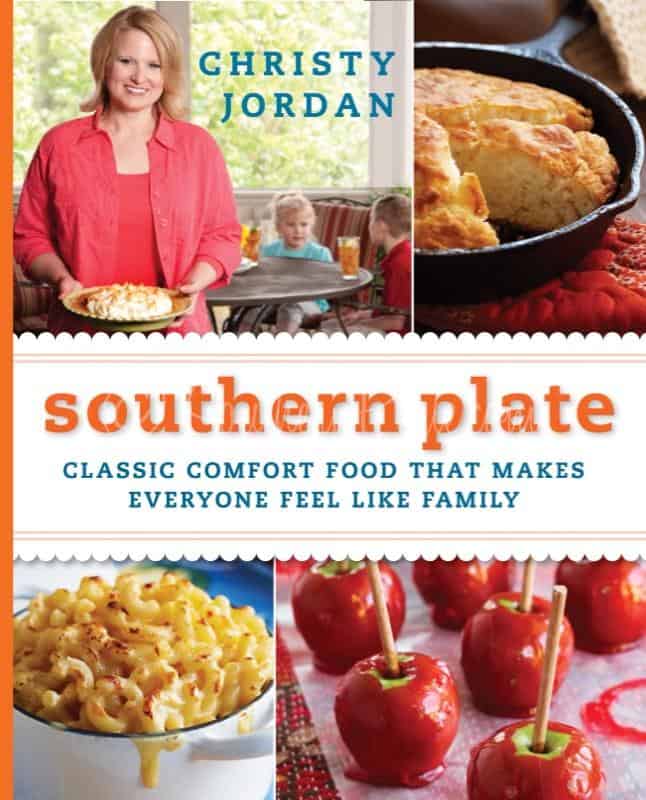
Christy Jordan is the latest internet food blog sensation to publish her own cookbook (following in the footsteps of huge bloggers like the Pioneer Woman). Jordan has a successful blog called SouthernPlate.com: Recipes from Below the Mason-Dixon Line where she posts down-home recipes from her Alabama homestead. Her debut cookbook Southern Plate: Classic Comfort Food That Makes Everyone Feel Like Familyis a compilation of recipes featured on her blog and new recipes never seen before, as well as stories to go along with them.

Devon O'Day is a Nashville country radio personality with her own morning show on WSIX, songwriting credits under her belt, and a host of other successes too numerous to name (country music specials, commercials, and television specials, for starters). She has now made her first foray into the book publishing world with the cookbook My Southern Food: A Celebration of the Flavors of the South. O'Day also includes sections such as "What Every Southern Lady Knows" and "Eating Out Southern Style."

The Southern Festival of Books will return to downtown Nashville October 8-10. Learn more about the Festival, sign up for updates, and enter contests at SFB's Facebook site and on Twitter.

Sunday, June 6, 2010

'Cleaving' Butchers the Julie Powell of 'Julie & Julia' Fame

My brother is a vegan, and after reading Julie Powell's latest book Cleaving: A Story of Marriage, Meat, and Obsession, I must say I've now given it some thought. All that talk about meat in its original state turned my stomach. I mean, I find it difficult to eat chicken or beef that I've cooked, just remembering it so recently in its raw bloodiness. So I haven't given up on my eggs, milk, & cheese quite yet, but meat is the furthest thing from something I'm craving at the moment.

Cleaving is the story of Powell's journey to self-destruction, beginning just after her bestselling novel Julie and Julia was released and made into a major motion picture of the same name. Despite her new found fame and fortune, Powell remained desperately unhappy with herself and with her life. Her first attempt at finding a purpose in life was starting the blog that begat Julie and Julia. But even that success happiness did not make. Her second attempt at finding herself? Beginning an affair with an old college boyfriend and current mutual friend of hers and her husband Eric's. Known mainly as "D" in the novel, he represents to Powell a place she simply can't get to -- satisfaction. After their affair ends badly, Powell continues her downward spiral, all in the name of "finding herself." There is the ongoing stalker-style text message & email assault she continues on D, coupled with the constant emotional distancing from her husband.

Powell realizes a new obsession -- becoming a butcher. Conveniently, the only butcher shop willing to allow her an apprenticeship is more than two hours from her home in the city. Thus, Powell is forced to rent an apartment far away from her husband, so that she can learn the rapidly-dying art of butchery. When she finishes the apprenticeship, she then embarks on an around-the-world journey to various meat-centric cultures: the big-beef industry in Argentina, sausage-making in Kiev, and goat-roasting in Tanzania. All of this training and traveling really amounts to one thing -- a geographic distance from her husband, which is more effective than the emotional wall she has been building for months.

The most interesting parts of Powell's novel involve people other than herself. I found myself fascinated with the family-like team at Fleisher's Grass-Fed and Organic Meats in upstate New York. They were an eclectic bunch I would read and enjoy a book about, sans Powell. Also interesting to me was Powell's husband Eric. What drives this man to stick by his woman's side, through thick and thin, good times and bad? That's a book I would like to read. Likewise, some of the best parts of the novel are during Powell's world tour of meat. She meets intriguing individuals whose stories could have filled tomes rather than chapters. Of course, most interesting to me was Powell's trip to Tanzania, where my brother and sister-in-law and baby nephew currently reside. Although Powell went nowhere near their small town of Geita, she did visit Arusha and safari through the Serengeti. I devoured every word of her experiences in East Africa, even the bad ones (and there are some).

All I can think is that Powell must be much more likeable in person than she comes across in the pages of this memoir. Rather than the self-deprecating character of Julie and Julia, the Powell of Cleaving comes across as self-loathing. She likes herself so little, it only makes sense that the reader also finds it difficult to empathize with her. But the people in her life hang on to her, making me believe that there is something within Powell to love. After all, Eric hangs around for more punishment; her family seems to enjoy spending time with her; the butcher team seems to have a genuine affection for her; and she's able to make friends the world round. If only some of that innate human-ness were present in this memoir, it might be more enjoyable for everyone.

Monday, May 17, 2010

Learn About Romance, Eating, and Living French-Style in 'Lunch in Paris'


My favorite type of non-fiction is the foodie/travel/memoir. Kim Sunee did an excellent job with her 2008 book Trail of Crumbs, which details her story of adoption from South Korea to New Orleans, then eventual move to France, and now I've found my next Sunee -- Elizabeth Bard and her memoir Lunch in Paris: A Love Story, with Recipes. Bard is a journalist from the United States who found herself living in London, and then -- by accident of love -- in Paris.

As Bard recalls her romance with Gwendal, a Frenchman through and through, she examines her true ambitions and how they fit with her new life in a slow-paced city. And, of course, she details each meal. Bard includes a wide scope of all things French, from the open air markets where she buys vegetables each day to the butcher shop with its crazy schedule (closed Monday, open Tuesday through Saturday but closed from 1pm - 3:30pm for lunch, closed Thursday afternoons, open Sunday mornings). Most importantly, she discusses the importance of eating in France and its link to social customs. She talks in detail about the food served at her wedding, the sixteen-course North African meal served on New Year's Eve by her brother-in-law, and a Passover feast she herself prepares.

Included throughout the memoir sections are recipes, which Bard explains are just starting points -- with each, she offers other ingredients which could be used, variations on preparation, and multiple serving suggestions. Some are not things I would probably ever make (I'm not even sure where I would find whole Octopus in the middle of Tennessee in order to make a salad...), but others are excellent -- a chocolate souffle cake and a method for cooking fish wrapped in packets in the oven come to mind immediately as recipes I will try in the near future.

Bard writes a foodie blog called Lunch in Paris, where she continues to share daily recipes.

Wednesday, May 12, 2010

Currently Reading...

In the past week, I haven't completed a single book, but I've had an incredible time reading all the ones I'm midway through. Sometimes switching it up is not a bad thing -- it's exactly what I want to do. It's difficult to concentrate on an individual piece of writing when I am always reading about the next hot release on my favorite book blogs, using the browsing feature on Amazon.com which just links and links and links, passing through bookstores (where I have no business in the first place), happening upon books that are part of a series (which means the other series books have to be added to my to-be-read list), searching for new titles on my local library shelves.... You get the picture.

So the books that I'm currently reading (and loving!) and how I found them:


  • Monkeewrench by P. J. Tracy -- Last week Kay at My Random Acts of Reading reviewed the fifth and most recent release in the Monkeewrench series. How this series had existed below my radar, I'll never know, but I luckily found the first two books while browsing the hodgepodge of items available at the Book Cellar in Crossville, Tennessee. Score! I'm on page 240 and speeding through to the end soon.
  • Lunch in Paris: A Love Story with Recipes by Elizabeth Bard -- I love to browse the new books section at the library, and when I found this memoir involving travel and eating, I knew I had to read it. Plus, the cover has a quote/review from Adriana Trigiani, so it couldn't be bad! Currently on page 189 and reading sporadically when I need a break from murder mysteries.
  • Major Pettigrew's Last Stand by Helen Simonson -- I found this oft-reviewed new book at the library... Patrons in my small town were obviously unaware of the hype the book has been receiving, so good for me! I've only just begun it (in the first few pages), so we'll see how it goes.
  • Fireworks Over Toccoa by Jeffrey Stepakoff -- This novel was also included on many book bloggers' sites over the past couple of months. I'm more than halfway through it, and if I read it straight through it wouldn't take long at all. It's a little too Nicholas Sparks for my taste, but I'm sure that means it will really take off at some point. The storyline thus far would make for a great The Notebook-esque summer blockbuster. Again, found it on the "New Book Shelves" at my local library, so the buzz hasn't hit the small towns yet.
  • Daddy's Girl by Lisa Scottoline -- I'm listening to this book on audio, and I've only made it through CD 1 of 8. Not sure this one will be finished. I just can't get into it yet. I had never heard of it, so it wasn't recommended from anywhere -- just searching library shelves for something exciting to listen to next. So far, this isn't it.
The race is on... Let's see which book I finish first! (My own bet is on Monkeewrench, since I can't seem to get it out of my hand.)

Sunday, January 24, 2010

'Killer Calories' Offers Up Cozy Mystery in Southern California Setting


G. A. McKevett's Savannah Reid is a southern belle who has been displaced to Southern California. She was once a police officer, but after being kicked off the force, she has now opened her own business as a private investigator. With the help of her apprentice Tammy and her former police partner Dirk, Savannah solves crimes in this mystery series. Killer Calories is the third book that chronicles Savannah's mystery-solving skills.

The business world becomes personal when Tammy's other employer is found dead at the spa she owned. Kat Valentina was once a beautiful and famous actress. After her career fizzled, she opened a spa in southern California with her husband and manager. The spa is a health-oriented one that serves green sludge disguised as breakfast and almost kills its visitors with exercise morning, noon, and night. But it's also a troubled spa, complete with a stalker security guard, a quack of a doctor, and elderly, spying neighbors. When Savannah gets an anonymous letter in the mail stuffed full of cash, asking her to investigate, she and Tammy jump at the chance to find out if Tammy's former actress/boss met death by her own hand or someone else's. Or was her murder just an accident -- too many margaritas mixed with an overly-heated mud bath?

Savannah is fun -- lots of it. And she likes to eat; she has Dirk sneak her out of the spa several times to eat bad breakfast food and burgers. She also enjoys fine dining with her friends John and Ryan, an elegant gay couple. She offers one-liners with style, and fights crime with her black belt in karate. McKevett's mystery is what Danna from Cozy (& Not So Cozy) Mystery Books and DVDs would call a cozy mystery. What does that mean, you might ask? Well, Danna includes an essay on what makes a mystery a "cozy mystery." Here is how McKevett's book fits to that definition:

  • Savannah "is an amateur sleuth. . . . Her education and life’s experiences have provided her with certain skills that she will utilize in order to solve all the crimes that are 'thrown her way.' [And] she is usually a very intuitive, bright woman." Yes, Savannah used to be a police officer. However, she was kicked off the squad. And she isn't doing very well as a private investigator -- she has bills piled up on every surface of her house. So that makes her an "amateur" in my opinion.
  • San Carmelita is in southern California, but it is still "a small town or village... The small size of the setting makes it believable that all the suspects know each other [and the spa setting feeds into that even more. Savannah is] a very likeable person who is able to get the community members to talk freely (i.e. gossip) about each other. There [are multiple people who are] very knowledgeable and nosy (and of course, very reliable!) characters in the book who are able to fill in all of the blanks, thus enabling [Savannah] to solve the case."
  • Savannah is "not a medical examiner, detective, or police officer [-- even though she used to be -- but] her best friend [and former partner Dirk] is. This makes a very convenient way for her to find out things that she would otherwise not have access to."
  • "The local police force [except for her friend Dirk] doesn’t take [Savannah] very seriously. They dismiss her presence, almost as if she doesn’t exist. This of course, makes it convenient for her to 'casually overhear' things at the scene of a crime." And in Savannah's case, they even let her examine the body; of course, none of her meetings with the medical examiner yield any results -- the medical examiner is convinced that Savannah is crazy for investigating the case and that all initial test reports were complete.
  • "In [this] series, [all of] the characters are likeable, so that the reader will want to visit them again. The supporting characters are equally important to the reader. It is for this reason that there are so many funny, eccentric, and entertaining secondary characters," such as Tammy, Dirk, John, & Ryan.
There are more ways Savannah & friends fit into the idea of a cozy mystery, but you should read Danna's definition of a cozy mystery for yourself for more information... and links to her other lists, of course.

I've already checked the fourth book in the series out at the library (for some reason, the first and second books aren't available) and I will be reading it soon. Also -- more on this later, but for now -- you can see the entire list for this series on my Series site, so that you read in order and don't miss anything!

LinkWithin

Related Posts with Thumbnails