Wednesday, April 21, 2010

100th Blog Post! And a Break-Down of What the Heck I've Been Writing About


As I neared my 100th blog post, I felt like I had to mark the occasion in some way. I'm going out to dinner tonight (although that has little to do with reaching 100 posts), so I guess that's somewhat of a celebration. But as I sat down to write a post about... well, posts, I realized that I wanted to know what it meant to reach 100 posts. What had I written about? What had I read? Who had I read?

So I spent some time creating an Excel sheet to enter data from my blog & organize it in various ways. Yep, pretty OCD of me! But now I know, and now I can keep up with these kind of things easily by simply adding to the worksheet as I add to my blog. I know you're all waiting with bated breath, so here goes -- the breakdown of books and blog posts:

  • 118 books read (most, but not all reviewed -- and some were reviewed or listed together in one post)
Of those 118:

  • 91 fiction (44 mysteries, 27 modern lit, 15 fantasies, 2 young adult, 2 romance, & 1 horror)
  • 27 non-fiction (22 memoir of various types, 2 true crime, 1 biography, 1 essay & 1 "foodie" non-fiction)
  • 63 are part of a series of some sort (59 of those were fiction & only 4 non-fiction)
  • 9 "foodie" books (memoir, non-fiction, & literature)
Setting is important (you know how I love my southern lit), so:

  • 25 were southern books
  • 19 books were set in California
  • only 13 books took place out of the U.S.
There were also at least 3 books I have remembered I never wrote about, despite LOVING them:

  • Traveling With Pomegranates: A Mother-Daughter Story by Sue Monk Kidd & Ann Kidd Taylor
  • The Fixer-Upper by Mary Kay Andrews
  • Mommywood by Tori Spelling
As for authors, here were my favorites according to the numbers (keeping in mind that there are many others who simply didn't have new books released in the past year and a half):

  • Michael Connelly (19 books)
  • Charlaine Harris (10 books)
  • Kathy Reichs (6 books and counting)
  • Jen Lancaster (4 books)
  • Stephenie Meyer (4 books)
  • Adriana Trigiani (2 books)
  • Joshilyn Jackson (2 books)
  • Dorothea Benton Frank (2 books)
  • Pat Conroy (2 books)
Only 7 posts were not about books, reading, authors or book events. Topics for these random posts included movies, music, & eateries.

Overall, a good run so far with this book blogging thing. No real surprises, although I would have never thought I read so many books set in California -- I think the Michael Connelly kick probably skewed that a bit, since most of his are Los Angeles based. Here's to another 100!

99 Bottles of Beer On the Wall...

So... Not really. But this is my 99th post for this blog, making the next one -- yep, you guessed it. The big 1-0-0. While I'm pondering on whether or not to go big or go small with that one, let's discuss a(nother) Kathy Reichs book:

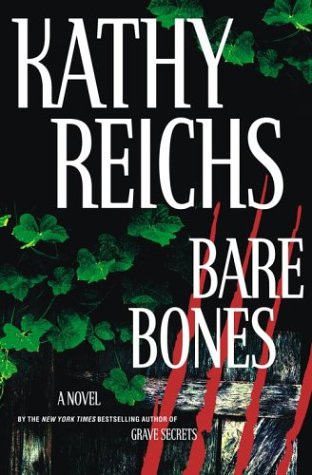
Tempe Brennan series book #5 (Grave Secrets) was not my favorite. But before I could get bored and move on to other books & series & authors, Reichs wrote Bare Bones and pulled me right back into her world of uncovered bones and murder conspiracies. Reichs chose a theme for each of the Tempe books I've read thus far - -there was the motorcycle gang one, the religious cult one, the Guatemalan genocide one, and now with Bare Bones there is the animal rights one. I say all that rather flippantly, but, a) it is true and b) it actually makes the series more interesting than if she didn't have a shtick. With her method of writing books centered around distinct themes, Reichs continuously puts Tempe into new and (for the most part) interesting situations. This minimizes boredom in readers (especially those like me who wait until the series is 14 books in, and so read all of them as fast as I can in order).

Bare Bones brings Brennan back to the North Carolina setting I love more than any other (although reading about Montreal is interesting, as was the foreign soil of Guatemala). I'm a southern girl through-and-through, and so enjoy a southern book more than anything else. Tempe is ready to leave on vacation when a bag of bones found at a picnic interferes and creates a delay. Other factors compound until Tempe is thoroughly embroiled in a series of investigations that prevent her departure completely. Tempe is joined by a love interest (I'll leave out details, as that's left as a cliffhanger in Grave Secrets) who helps her work the cases. Things become personal when Tempe receives threats to both herself and to her daughter Katy.

Two of the cases bring Tempe into the world of endangered animal poaching and trafficking. Both the bears of North Carolina and a particular kind of parrot from South America find themselves topics of Tempe's research when she discovers bear bones mixed in with human ones, then a bird feather mixed into a drug cache. Katy's new boyfriend also turns out to be a wildlife resources agency official, and Tempe is unsure how she feels about him. Could he be involved in some of her cases, or is it just a bad case of mother's intuition and feeling overprotective?

Great action, and great views of the inner workings of Tempe's psyche. Reichs shows what she's made of in this novel, and it -- like the Guatemalan Civil War novel just released prior to this one -- is drawn from Reichs' personal experience. At the novel's end, Reichs explains in minor detail her real-life case that inspired Bare Bones. Also, cute title, huh? (Get it? Bear bones = Bare bones?)

Tuesday, April 20, 2010

Guatemalan Civil War Atrocities Addressed in 'Grave Secrets'


From 1990 until 1996, over 200,000 people disappeared or were killed in Guatemala. That thirty-plus years signified the Guatemalan Civil War between the government of Guatemala and insurgents in the country. Although the war was largely political, many innocent citizens were killed throughout the war, especially women and children.

In Kathy Reichs's fifth novel, Grave Secrets, forensic anthropologist Dr. Tempe Brennan has traveled to Guatemala as a worker for the Guatemalan Forensic Anthropology Foundation and their recovery efforts to find and identify victims of human rights violations during the war. Brennan's efforts yield results both historical and present-day when, after leaving a dig site, she is pulled into a recent murder scene in a hotel septic tank. Guatemalan Inspector Galiano asks for her assistance in solving the case. As they investigate, four young women from Guatemala are discovered missing. Galiano and Tempe rush to find out which of the young women was found in the waste water, and if the body belongs to the daughter of the Canadian ambassador to Guatemala -- one of the missing girls.

Although at first glance, the subject matter sounds interesting -- especially for someone like me, who minored in Women's Studies in college -- Reichs somehow falls flat in this attempt. I did manage to finish it; after all, it is a Tempe Brennan novel, and so it was interesting despite some pitfalls. While Tempe's private life stays out of the spotlight in this novel, Reichs does introduce Galiano as a possible new suitor, one who is in direct conflict with Tempe's long-time on-again-off-again flame Andrew Ryan. Ultimately, Reichs brings attention to the situation in Guatemala, which -- even as an educated, well-read person -- I was largely unaware of until reading this book.

But for me, history is not the only reason to read a book, and so I need a bit more plot and character interaction. Although, as I said, Reichs gives readers a new character in Galiano, his addition didn't make the novel for me. I felt it was too short, or too little action, or something. But, again, it furthers Tempe's story, and so I would have read it -- no matter how good or bad -- to continue my obsession with this series. (And I was right, because I've already finished the next book -- Bare Bones -- and it was fabulous!)

Friday, April 16, 2010

'Fatal Voyage' Makes Sleep Difficult and Nightmares Almost Certain


Kathy Reichs is keeping me up nights. Initially, that was because I couldn't bear to put down her fourth novel, Fatal Voyage. Now it's the subject matter of the book (well, that or the medicine I've been taking for a cold that I just can't seem to shake). Either way, I'm up late tossing and turning and thinking about the novel I just finished. And haunting is an accurate word for this particular book.

Riechs is well-known as the creator of the Fox television series Bones. The show is loosely based on both her life and the life of her fictional counterpart, Tempe Brennan. While the majority of the first three books details Brennan's work in Montreal, in Fatal Voyage she returns to her full-time hometown of Charlotte, North Carolina. I have enjoyed Reichs' foray into Canadian territory (and one she knows well, as she holds the exact position there that she gives Tempe in her books), but the south is my old friend, well-known and never tiresome.

As the novel opens, a commercial plane has crashed in the North Carolina woods on its way from Atlanta to the northeast. Tempe is called in as part of the DMORT, or Disaster Mortuary Operational Response Team. Again, this is subject matter Reichs is well-versed in, as she also serves as a DMORT responder in the United States. As Tempe aids with the investigation, attacks begin on her character and on her ethics. She rushes, with the help of Canadian detective Andrew Ryan, to clear her name. Which means, of course, that additional mysteries must be solved. During the crash investigation, Tempe happened upon what appeared to be an abandoned lodge in the woods, and at the same time found a piece of evidence which doesn't quite match up to the time frame and details of the crash. She works to fit these parts into the larger puzzle as a media frenzy opens up around her.


For some reason, Fatal Voyage is a little-circulated part of the Tempe Brannon series. My Amazon.com search offered only used copies, so it may not currently be in print. It is also one of only two of her books not available at my local library. As popular as Bones continues to be, I find this surprising. I found it to be thus far the most enjoyable of her books to date (or as far as I've gotten in the series, anyway). It does deal with some grisly subject matter, as I mentioned when I listed it as a possible reason for my inability to sleep. It was also released in 2001, just as our nation was suffering the shock of the terrorist attacks on 9/11. Reichs addresses that in an added note at the end of my paperback copy of the book. She was one of the first on the scene to help identify victims of that attack, and she states that it was difficult to think back about this novel's discussion of mass death in light of that much more terrible and real tragedy. Perhaps she's never had the heart to have it marketed as her other books have been. In my opinion, the book describes the difficulties those working the scene of a tragedy face, and that is a valid and reasonable point of view to portray.

The only negative I saw in the book was Reichs' continued overuse of coincidental events. I suppose fiction writers must exercise some sort of license to stretch a bit beyond what we would consider reasonable, but Reichs does so in each of her books with little sign of letting up. Previous so-called coincidences have linked Tempe's home cities in Montreal and North Carolina, and even tied cases being investigated together. In this book Reichs conveniently places Andrew Ryan's partner as a passenger on the downed plane. Thus, Ryan has reason to travel to North Carolina and into Tempe's southern setting. I would venture to say that authorities in one specific city in Canada have little reason to visit a particular state in our country (especially as a result of investigations being tied together) on a yearly basis. However, if you can overlook a bit of over-the-top plot twists, Reichs can sure spin a good tale. I'm also reveling in the fact that she's fairly prolific -- with four down, I still have eight books to go and a new one being published this summer!

Thursday, April 15, 2010

'Bones of Betrayal' Traces Oak Ridge History and the Making of the Atomic Bomb


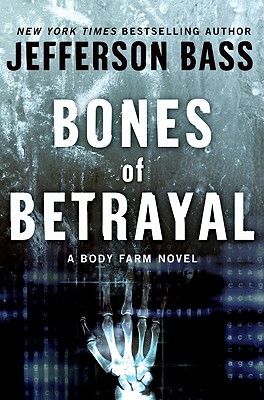
Bones of Betrayal actually began as my least-favorite-thus-far Body Farm novel. I found it difficult to drum up interest in nuclear and radiological terrorism, which is the subject matter as the novel begins. However, that quickly changed -- so much so that Bones of Betrayal may actually be my favorite of the four books so far. It would be difficult to beat the second and third books being set partially in my former college town of Chattanooga (and its outskirts). But Jefferson Bass enters new territory in the fourth Body Farm novel -- historical territory.
Let me be the first to admit that history is not always interesting to me. I may or may not have made one of my poorest high school grades (and my only C in my entire high school career) in American History... Yes, that's sad. I love to read and to learn, but usually not things about history. Tennessee history is a bit different. I'm still never going to be a scholar in any kind of history, even of my home state. But there are bits that I find interesting, and the author team of Dr. William Bass and journalist Jon Jefferson wrote about just such a piece of history.
In Bones of Betrayal, Jefferson Bass explores the rich history behind the Tennessee city of Oak Ridge and the building of the atomic bomb during World War II. When an elderly scientist turns up dead, Dr. Bill Brockton (Dr. Bass's fictional stand-in) is on the scene. As Brockton and his colleagues investigate cause of death and work to find the murderer, they become entrenched in Oak Ridge's controversial history and relationship to the bombs dropped over Japan. Brockton begins interviewing a former Manhattan Project employee who has ties to the dead scientist, and the team of Jefferson Bass allows the elderly woman to narrate several sections of the novel in first-person voice.

Photograph of an Oak Ridge/ Manhattan Project billboard cautioning
workers to keep their work to themselves, thus furthering secrecy.

Bass includes a note at the novel's end delineating fact from fiction in the book. While the novel's main players and scenarios are fictional, Bass includes many historically accurate details of place and people.

For more reading on the history of Oak Ridge and the Manhattan Project, see the following resources online:

Wednesday, April 14, 2010

'The Wife's Tale' Becomes a Story of Finding Oneself While Losing Oneself


I don't remember reading Lori Lansens's second novel The Girls. The title and her name sound so familiar, but in reading the summary for it, nothing sounds like a book I've read. Many readers will remember her from that bestselling novel, but she writes a very different story in her latest release. In The Girls, Lansens explored the story of a set of conjoined twins. In The Wife's Tale, Lansens has a single narrator, one who is isolated from the world around her.
Mary Brody Gooch is a housewife. No, not the kind you see on Bravo's television series, with diamonds dripping and fake tan brightly displayed. Rather, she is morbidly overweight and hasn't shared a bed with her husband in more than six years. An only child, Mary's mother is now confined to a local nursing home and her father recently passed away. Alone in the world except for her husband and her cat, Mary eats her way from sunrise to sunset, trying to cram enough food into her body to fill the hunger she feels constantly. She works part-time at the local pharmacy, but often finds herself the butt of jokes.

During a brief period in high school, Mary found herself thin; it was at this moment that she met her future husband, a high school athlete who wouldn't have given Mary the time of day before. But as the years pass by, she slowly adds weight back to her frame, and at the same time, a blanket of melancholy over her soul. Then one day, not too long after the passing of her cat and her father in quick succession, Mary's husband doesn't come home. As she sets out on a journey to find them and make things right between the two of them, she loses her appetite and some of those excess pounds. Simultaneously, she finds herself.

What sounds like a cliched tale actually develops into a story full of emotion and beautifully written by Lansens. It is multi-faceted and unexpected in its surprisingly fresh minor characters and nuances of plot. Although I found some parts of the novel a bit slow-moving for my taste, I relished in each new-found joy Mary discovered. I also wanted to know what would happen at the end. Would they get back together? Would Mary find who she truly wanted to be? Ultimately, would Mary ever be happy? While Lansens does not deliver a cut-and-dried, happily-ever-after ending to the novel, she leads the reader through the emotions felt by Mary and I believe you could say Mary triumphs in the end.

Read a fantastic interview with Lori Lansens from author Joshilyn Jackson over at Faster Than Kudzu to learn more about the author and her three novels, including this one. (Oh, and on a side note? I really, really thought I entered the contest to win a copy of this book. But in scanning the comments, can't find my name anywhere. I was so disappointed when I didn't win... The moral? Double-check yourself if you really want to win a contest!!)

Tuesday, April 13, 2010

'U is for Undertow' Doesn't Satisfy My Kinsey Milhone Itch


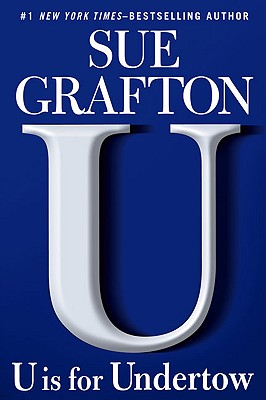
Let me begin by getting a few things straight. I love Sue Grafton. And I love Kinsey Milhone. I love both of them in Grafton's latest novel, U is for Undertow, and I also really liked the novel. Yes, I said that exactly right -- I love Grafton & Milhone, and liked Grafton's latest book. It did what it was designed to do; it gave readers more of what they've been asking for -- more Kinsey. It just didn't (400 plus pages later) satisfy my yearning for another great Grafton mystery.

In U is for Undertow, Grafton sets up quite an interesting mystery. Michael Sutton, pariah of the upper class in Grafton's fictional Santa Teresa (a la Santa Barbara) and especially the ritzy neighborhood Horton Ravine, hires Kinsey to do some detecting for him. The local newspaper just did a piece on famous missing children who were never found, and one story in particular jumps out at him. Sutton believes he remembers stumbling upon two men (or "pirates", as his 6-year-old self thought of them) burying something. At six, he might have believed their "buried treasure" act; at close to thirty, he doesn't. Sutton persuades Kinsey to take his case and help him reconstruct that day more than twenty years ago. Fittingly, that the case begins 21 years prior, and this is Grafton's 21st Kinsey Milhone chapter.

In the novel Grafton switches between several narratives, both present-day and from 1967. She uses not only Kinsey, but also the kidnapped girl's peers and other Horton Ravine families who seemingly have little-to-no relation to the crime. As other characters play such a prominent role in the novel, the reader can easily deduce who the guilty part(ies) might be, long before Kinsey has gotten there. In fact, Kinsey does little work towards the plot's climax, leaving me wishing for more wisdom on the part of this beloved detective. Grafton does include some inner conflict for Kinsey, in the form of continued estranged family communications. However, even that leaves something to be desired.

Grafton talks about the book:


Was I happy to have another book through which to enjoy Kinsey and her fellow recurring characters? Absolutely. Did I feel she was almost a side character in a larger novel Grafton was attempting to write? Somewhat. Did I enjoy the novel? I did. I just wished for more Kinsey-style angst and less narration from one-time characters. Would I recommend it? I would, for both long-time Grafton fans and for new readers.

If you're just now hopping on the Kinsey Milhone train, U is for Undertow wouldn't be a bad way to start. It has just enough intrigue to prove interesting, while little enough background required that a new reader would not find him- or herself lost. That being said, what Grafton first-timers should actually do is go back to the beginning and learn about Kinsey from A is for Alibi and B is for Burglar. Then make your way to U is for Undertow; by the time you're through, a new book will be out and you won't have to wait for the "V" version.

Although I would dearly love to see our Kinsey on the big screen (or even on the small screen, for that matter!), Grafton's one wish is that her detective never be immortalized in a film of any kind. I've even read that she has threatened to come back and haunt any relatives who sell rights to her books after she's dead and gone. Maybe before that happens, she'll re-think that statement. Until then, Kinsey will live in the minds of millions of readers across the world.

Monday, April 12, 2010

Read-a-Thon Wrap-Up (Or: How I Failed, But Didn't Really)


So my first 24-hour read-a-thon is over, and I can't brag and say I made it the whole time. I can say that I was conscious of it happening during its time frame, and that I made a concerted effort to read more than not-read.

To all those who made it the entire 24 hours without taking (long) breaks, congratulations and, "I'm not worthy, I'm not worthy!" (in the spirit of Wayne & Garth). In fact, just to call attention away from my own transgressions, let's revisit that scene and celebrate those of you who made it the whole time (and therefore are similar to Alice Cooper? I'm not sure about that metaphor!):


So to sum up my own reading, I'll tell you what I read over the weekend rather than over that 24-hour period of time set aside for the read-a-thon:

  • U is for Undertow by Sue Grafton (403 pages), read late Friday and into the wee hours of Saturday morning
  • The Wife's Tale by Lori Lansens (353 pages), read in the wee hours of Saturday morning, sporadically throughout the day on Saturday, then from 10pm or so Saturday night until the wee hours of Sunday morning
  • Bones of Betrayal by Jefferson Bass (so far, 249 pages read with an additional 47 to go), read Sunday in spurts throughout the day & night
  • The Cracker Queen: A Memoir of a Jagged, Joyful Life by Lauretta Hannon (so far, 32 pages read with an additional 190 to go), read late Sunday night
Not the most prolific list, and nary a dent in the ubiquitous TBR (to-be-read) pile, but an entertaining weekend of reading nonetheless. More detailed thoughts on the finished books later!

Friday, April 9, 2010

Just Signed Up For The 24-Hour Read-a-Thon... Think I Can Make It?

I just entered my name on the list for Dewey's 24-Hour Read-a-Thon, and I'm more than a little hesitant. Read for 24 hours straight? I'm not sure I can manage that, especially with everything going on right now in my life.

My grandmother has been in the hospital all week. A feisty, independent 82 year old, she was out working on her farm raking and burning leaves when she fell and broke some ribs and punctured one of her lungs on Monday morning. She's been most unhappily confined to her hospital bed, so the whole family has been keeping her company in an effort to keep her spirits up. All this means I'm a bit tired, but it could present more opportunity for reading. I mean, what better to do while sitting in a hospital than read? Perfect, right? So maybe I can do better than I think.

It sounds kind of fun to stay up all night reading (I stay up really late often enough, anyway!), but I'm not so sure I can make it 24 hours without sleeping at all. Dewey says it's okay to sleep, so I guess I can still consider myself a "reader" for the read-a-thon, even if I don't actually read for the full 24 hours!

Join in here if you're interested. Remember, no one will be policing your reading hours, so a full 24-hour commitment isn't necessary. But it should be fun! It'll be my first, so we'll see how things go. If you have any questions (or are afraid of not being able to commit yourself), check out the FAQs to banish your fears and learn what it's all about.

Wednesday, April 7, 2010

I'm Stuck On Repeat... 'The Devil's Bones' Is Just as Amazing as The First Two Body Farm Books (And I Can't Stop Raving!)


I know it gets tiresome to continually hawk the benefits of one author over and over (for three posts now!). But technically Jefferson Bass is TWO authors... So does that make it different? Probably not, but I don't care... The Body Farm series is continuing to entertain and amaze me, now three books in.

The third novel in the series, The Devil's Bones, continues the story of Dr. Bill Brockton, University of Tennessee professor and Body Farm founder. You need to read the first two novels to really appreciate this one, as it delves deeper into a storyline about a former-colleague-turned-murderer who still has a bone to pick with Brockton (pun intended).

Forensically, the novel discusses the affect of fire on bones. The book begins with a case of a woman who died in an automobile fire. There are reasons to suspect foul play, but the main suspect -- the woman's husband -- was thousands of miles away in Las Vegas at the time of her demise. Brockton conducts experiments to study the affect burning bones has on new and old bones. New, or "green", bones burn in a spiral pattern that develops from the moisture in them being released quickly, so that the layers of bone are almost steamed. Older, dry bones burn in a linear, heavily patterned way, much like old logs in a fire. Think about the end of logs burned in a fireplace or bonfire -- a crosshatch pattern. That's how you can tell the difference in new and old bones, therefore also being able to tell the difference between whether a body was burned soon after death or a lengthy amount of time after death.

To go along with the burning bones experiments, Jefferson Bass (a team of both Dr. Bill Bass, the actual Body Farm founder from UT, and journalist Jon Jefferson) also addresses a real-life case that I remember from my college years in Chattanooga. In 2002, a Georgia crematorium was discovered to have been not performing its duties as advertised (and as it was paid for). During a search of the property that resulted from anonymous tips to the GBI, more than 300 bodies were found buried and piled up on the property. The crematorium had been sending back to families a mixture of human and animal bones, concrete mix, and filler materials rather than the remains of their loved ones. Bass places Brockton thick in the middle of this case, one that was extremely interesting to me, as I remember vividly watching CNN's 24-hour coverage of the property search and ongoing investigation. Real-life Body Farm professor and author Dr. Bill Bass worked some of the cases, which gave him an inside view and factual representation of the story in this novel.

I think I've gone on enough... Go get these books! (My mom has them in hand and has already started the first one, soon to be followed by my other family members.)

Sunday, April 4, 2010

'Flesh and Bone' Proves Even Better Than Professor's First Body Farm Book


I always think it's amazing when I discover a whole series of mystery novels that I haven't really heard of before... That happened a few weeks ago when I found UT (that's TENNESSEE, thank you very much -- not Texas!) professor Dr. Bill Bass's books about a fictional forensic anthropologist who works at the Body Farm in Knoxville. I had previously heard Bass speak when his nonfiction part-biography, part description of the Body Farm's beginning was released several years ago. So I was aware that he had written Death's Acre. Somehow his crime fiction series had slipped below my radar, though.

I bought the first three novels together, because McKay's in Nashville had them; I figured even if they weren't great, I could make my way through them since they were set in Tennessee and were mysteries. I was pleasantly surprised to find that the series was really good. Bass has teamed up with former journalist Jon Jefferson to write these books under the pen name Jefferson Bass, and the two of them must have some kind of special writing chemistry, because it really works well.

I breezed my way through their first book, Carved in Bone, in just a couple of days. I think I completed the second, Flesh and Bone, in under 24 hours. It was just that good. I couldn't put it down -- I had to know what happened to Dr. Bill Brockton and how it happened. I'm now midway through the third novel (and a little panicky, because where am I going to find the other two?). My local library has copies of both the fourth book and the fifth, which was just released at the end of March. But who knows if they'll be in when I go this week...

Carved in Bone was fantastic (and you can read all about it just below this post in my review of it), but Flesh and Bone blew me away. It was so much more in-depth. The writing duo delved deep into Dr. Bill Brockton's character, and also fleshed out (like my verbage?) his friends and family, as well. In this novel, Brockton is helping Chattanooga's medical examiner Dr. Jess Carter pin down time frame in a murder case, when a second body pops up. When Brockton becomes the focus of the police investigation, he finds himself with a lot of alone time and few people to turn to. As the police focus on the evidence against him, he works to unravel the murder of someone close to him. Not only does Brockton want to clear his name, but he also wants to bring the real killer to justice.

One reason I loved this book so much is the setting. When Jefferson Bass describes place, it is dead on. Knoxville and Chattanooga fairly jump off the page, almost becoming characters in the story themselves. I lived in Chattanooga for almost five years while attending the University of Tennessee at Chattanooga, so it is a city near and dear to my heart. Any (good) novel set there is bound to become one of my favorites. I love this series so much I've been fairly lunging at family members, listing its virtues and promising everyone I know my copies when I'm done with them. That's how good these books are, and that's how much I want everyone I know to read them. Mystery lover or not, Dr. B will capture your attention and hold your interest. Tennessee residents and other southerners familiar with the area will relish in them, as well.

Friday, April 2, 2010

Tennessee Body Farm Founder Enters World of Crime Writing in 'Carved in Bone'


Several years ago I sat in an audience as slides of dead bodies in various stages of decay flashed on a large screen in the front of the room. We watched as a corpse went from whole and flesh-covered to maggot-ridden to bone in less than a dozen photos. While horrified, I was also intrigued. The speaker was Dr. Bill Bass, famed forensic anthropologist from the University of Tennessee in Knoxville, and he was discussing his book about his research, Death's Acre: Inside the Legendary Forensic Lab the Body Farm Where the Dead Do Tell Tales. After that nonfiction book was released in the fall of 2004, Bass and his writing partner Jon Jefferson teamed up on another project -- a fiction mystery series based on Bass's years working at the Body Farm.

The two combined their names into the pen name Jefferson Bass, and began a series detailing the personal and professional life of main character Dr. Bill Brockton. Brockton is a widower, currently married to his work only. 2 am phone calls asking him to appear at the scene of crimes are nothing out of the ordinary.

In the first book in the series, Carved in Bone, Brockton is called upon by rural Cooke County Sheriff Tom Kitchings to help solve the mystery of a body found mummified after 30 years in a cave deep in the Tennessee hills. Brockton willingly provides his services, but rethinks his involvement when things begin to get dangerous. Cooke County is a fictional county, perhaps loosely based on modern-day Union County, which was called Cooke County from 1797 until 1846. Cooke County is a backwoods area largely overrun by illegal activity. When Brockton begins to suspect that those in power are involved in crime, as well, he attempts to back out of the case. He is drawn back in by force (and even kidnapping, in a couple of cases), and works to solve the murder against his better judgement.

Jefferson Bass follows in the footsteps of Patricia Cornwell in this excellent addition to the world of crime writing. Cornwell actually propelled the real-life anthropologist Bass to fame when she included him and his Body Farm in her Kay Scarpetta novel named for the facility. The co-authors Jefferson Bass do a wonderful job of describing the east Tennessee setting, both in Knoxville and in the more rural areas. They also have created a lovable, intelligent, and caring protagonist who I look forward to reading more about.

The writing team of Jefferson Bass is currently on a book tour for their latest book The Bone Thief. I am already halfway through the second novel in the series, Flesh and Bone. More on this series to come soon (as I'm reading them as fast as I can get my hands on them)! Excerpts from their books are available at their website, including the prologue and first chapter of the first book.

You're very own look at the Body Farm in a tour by Dr. Bass himself (WARNING! VIDEO CONTAINS SOME GRAPHIC MATERIAL THAT MAY NOT BE SUITABLE FOR ALL VIEWERS. WATCH AT YOUR OWN RISK.):

LinkWithin

Related Posts with Thumbnails