Showing posts with label Classic Literature. Show all posts

Friday, October 28, 2011

Reading in the Classroom: Edgar Allan Poe & Figurative Language

With Halloween coming up on Monday, we -- of course -- had to read some Edgar Allan Poe in my classroom this week. Since my students are middle school-age, not high schoolers, we kept it fairly tame. We read Poe's famous poem "The Raven," and I also discussed the short story "The Tell-Tale Heart" with my eighth-graders.

We began our week with a review of figurative language terms. The students practiced differentiating between examples of idioms, similes, metaphors, hyperbole, imagery, and alliteration, among others. We then played a review game which divided the class into two teams and encouraged learning with some old-fashioned competition. After that, we then dove into Poe's life with a short video from Discovery Education.

Although I don't always believe it's necessary, I felt that some background on Poe was needed for my students to understand his writing. The loss of his mother, adopted mother, and wife truly affected his life and his writing. It created the basis for his terror-filled tales.

I brought "The Raven" to my middle schoolers' level and sparked their attention by first showing them a clip from The Simpsons first Treehouse of Horror episode, in which they animated "The Raven." The bookworm Lisa begins reading the poem aloud to her siblings, then the scene transforms to Homer as the poem's narrator and Bart as the stately raven. The two act out the poem as James Earl Jones narrates.


Their interest piqued, we then read the poem itself and discussed it stanza by stanza. Then we pulled it all together, as the students identified figurative language examples in "The Raven." Listening to their conversations about whether this line or that line was an idiom or an example of hyperbole was one of those "teacher moments" that make it all worth it.

The next day my eighth-graders and I looked at Poe's short story "The Tell-Tale Heart." They read the story last year, but we reviewed the plot by watching a short 1940s animated version of the tale. Many, many versions exist, but I felt as though this seventy-year-old film was the most creative and the most appropriate for my students. We then wrote out a plot diagram for the film to ensure that they recalled the story and had understood the short film.


Their final assignment for the week involved summarizing the plot of "The Tell-Tale Heart" in one of two ways: by creating a comic strip based on the story or by writing an acrostic poem based on the story. With either choice, students also had a choice of completing their assignment on computers or by hand.

The website ReadWriteThink is a partnership between the International Reading Association, the National Council of Teachers of English, and the Verizon Foundation's Thinkfinity, and it has amazing resources. Both the Comic Creator Tool and the Acrostic Poem Student Interactive are available on their website (as are hundreds of lesson plans and other tools for learning).

Although Poe's work was written over 150 years ago, my students still found meaning in his writing -- and they enjoyed it! At least I think they did -- they do always tell me that my idea of fun and their idea of fun are two different things.

Monday, October 17, 2011

Dancing with Mrs. Dalloway Is the Perfect Gift for Book Lovers and English Teachers

One of my weaknesses is books about books. Not necessarily literary criticism, although I sometimes enjoy that, as well. But what I really like is books about authors and their writing. I own several literary-minded cookbooks, both by authors and compilation cookbooks that relate recipes to specific stories or characters. (I can think of The Pat Conroy Cookbook, Patricia Cornwell's Food to Die For and Adriana Trigiani's Cooking with My Sisters off the top of my head.)  I also like travel books that feature literary locations (such as Scarlett Slept Here by Joy Dickenson), as well as other more general books.

Celia Blue Johnson's Dancing with Mrs. Dalloway: Stories of the Inspiration Behind Great Works of Literature fits perfectly into this niche because it is a book about books -- specifically their backgrounds. In her new book, Johnson tells the story behind the stories, from Lewis Carroll's Alice in Wonderland to Edgar Allen Poe's "The Raven."

The wonderful thing about Dancing with Mrs. Dalloway is that it can be used in a myriad of ways. For book lovers who would like to browse, the book is laid out perfectly. Johnson organizes the stories perfectly so that browsing is easy. The table of contents lists books by title in sections that connect the background stories to one another. For example, authors who began great works by first telling them aloud are collected in the "In the Telling" section.

Dickens' pet raven Grip
I had great fun simply browsing Johnson's book and reading whatever caught my fancy at the moment. I didn't read the entire book from cover to cover; instead, I read those chapters that described the background of books I had read and enjoyed. I learned via Johnson that Poe's raven was inspired by Charles Dickens' actual pet raven Grip, which he later had stuffed. (The bird can still be visited in the Rare Books department of the Philadelphia Free Library.) I also learned that L. Frank Baum named his land Oz after looking at drawers labeled alphabetically (the O - Z drawer, of course).

As an English teacher, this book holds a special place in my heart, as I can think of a million ways to use it in my classroom. My students and I will be reading and learning about Edgar Allen Poe in the next couple of weeks leading up to Halloween, and I am planning to read the chapter about him to them as extra background information.

Dancing with Mrs. Dalloway is the perfect book for any book lover, especially with the holidays quickly approaching. Reading and English teachers will also appreciate this book for the little something extra it can add to their lessons.

Monday, July 12, 2010

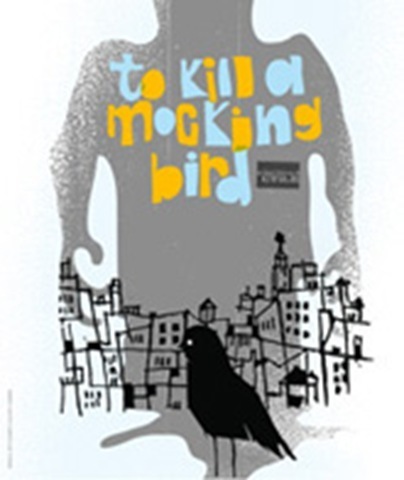
Celebrating To Kill a Mockingbird

I would be remiss in my mission to discuss great southern literature if I did not mention Harper Lee's To Kill a Mockingbird this week, as the novel celebrates its 50th anniversary. In my header I state that it is my goal to "devour books and information in order to find 'such a thing in the world' that will last 'the whole enduring time'" -- phrases borrowed from Eudora Welty's short story "A Worn Path" and my blog's namesake. Lee's masterpiece exemplifies that phrase; it has been translated into 40 languages and has never been out of print since its first publication on July 11, 1960.

Although her novel has been a bestseller for 50 years, it remains Lee's solitary publication. She spent the years immediately following its release granting interviews and traveling for events relating to the book. The book and Lee herself received much critical acclaim and many honors, perhaps the most prestigious of which was the Pulitzer Prize in 1961. In 1964, Lee removed herself from the spotlight and became somewhat of a recluse, at least in terms of speaking about Mockingbird.

My beautiful friend Nicole Worzek had the exceptional experience of having dinner with the great author during a trip to New York City several years ago. She had gone to the city for the summer to fulfill a lifelong dream to spend time there, seeing sights and experiencing New York City at its best. She rented a room in a New York brownstone, from a wonderful family who welcomed her into their home with open arms. One evening near the end of her stay, one of the children asked the mother if she thought their guest would like meeting "Nelle." The mother agreed, and soon after, my friend was getting ready to go to dinner with the family. "Nelle," actually the author's first name, turned out to be none other than the exceptional Harper Lee of Mockingbird fame.

I asked Nicole for every detail in countless re-tellings of the dinner recounted in the weeks and months after her return. She was remarkably low-key about her experience, perhaps in acknowledgment of Lee's wish to remain a private person. Nevertheless, that dinner was doubtlessly a high point not only of her time in New York, but also in her life. What book lover would not relish the idea of an evening spent with this beloved author?

Harper Lee was born in 1926 in the small town of Monroeville, Alabama, and lived next door to In Cold Blood writer Truman Capote. She was awarded the Presidential Medal of Freedom in the United States in 2007 for her contributions in literature. She has written an unfinished novel, reportedly titled The Long Goodbye, and also began but did not complete a non-fiction book centered around a serial killer. To Kill a Mockingbird has been translated onto the silver screen in the 1962 movie of the same name, as well as in a play performed in Lee's hometown since 1990.

LinkWithin

Related Posts with Thumbnails