Showing posts with label Books Set in Tennessee. Show all posts

Wednesday, October 16, 2013

Book Review: The Funeral Dress by Susan Gregg Gilmore

If you've read my blog for a while or visited my "About" section, you know that southern literature has my heart. Although much of what I read lately is YA, education-related, mystery series books, or women's fiction for SheReads, southern lit is still near and dear to me. So I jumped at the chance to read Chattanooga author Susan Gregg Gilmore's latest novel The Funeral Dress.

This novel, y'all, is not for the faint of heart. If you can't stand a good, long cry, this isn't the book for you. I tweeted the other day that I had cried my way through the book, and I wasn't kidding. Once you get over the first little bit of hormone-adjustment that comes after having a baby (as I did just over a year ago), the baby's first year of life isn't exactly a time for tears. You simply don't have time for that. So I can't remember the last time I had a good cry -- until this book. It's characters turned me inside out. My baby girl just turned one, and something about this novel and that combination made my heart hurt. In a good way.

The Funeral Dress begins in 1970s Dunlap, Tennessee -- renamed Cullen, Tennessee, for Gilmore's literary purposes. Most of the work than can be found for women in this small valley town is at the Tennewa garment factory, and Emmalee Bullard gets hired on at the tender age of sixteen. She doesn't have any experience sewing, but the lady in the next seat over, Leona Lane, does. For whatever reason, this tough cookie takes Emmalee under her wing, showing her the ropes both at the machine and navigating the waters of Tennewa's complicated social scene.

For the first time in her life, Emmalee has a place that's solely hers. Not her mama's, long dead from an illness her father blames on Emmalee, or her father's, a mean drunk who acts as the king of their tiny, rundown shack. When Emmalee turns up pregnant with a baby of her own after a brief affair with a boy out of her league, she struggles to find a way out of Red Chert holler and away from her father's meanness. Leona offers her a way out, and Emmalee jumps at the chance to escape. However, life hasn't had a history of being easy on Emmalee, and it isn't about to start now.

When Emmalee's one chance out of her father's house and her only chance to give motherhood a real try disappears, she makes a decision that she isn't going to let fate decide what happens to her. Instead, she's going to stand up and make her own destiny.

Emmalee's story touched my heart in many ways -- as a new mother, I identified with her struggle to feed her baby, to heed the baby's cries, to reconcile the end of her previous independence. As the granddaughter of a garment factory worker, I considered my Granny Mullins's back-breaking work at a sewing machine. As a Tennessean living less than an hour from the story's setting, I understood the deep-rooted struggles of the townspeople living in an Appalachian wilderness. It touched me so much, that (in the midst of tears), I almost gave up. It was almost too true a fictional story for me to keep reading. But I did, and you should. The ending is worth all the crying.

Related Links:
Susan Gregg Gilmore's website
Crown Publishing's feature "Susan Gregg Gilmore on Writing The Funeral Dress"
Nashville Scene's book review "Susan Gregg Gilmore's thrid novel The Funeral Dress imagines the struggles of a young Tennessee seamstress: Making Ends Meet With Every Single Stitch"
SheReads's feature "Tell Me Something True: A Visit with Susan Gregg Gilmore"

Wednesday, June 22, 2011

The Bone Yard Takes Dr. Brockton to Florida From the Body Farm

Several years ago, I sat in a crowd of people and watched a body decompose in a series of time-release photographs. In the heat of a Tennessee summer, the decomposition took about two weeks. I was both repelled and fascinated.

The presenter of the photographs? Dr. Bill Bass, founder of the University of Tennessee's Body Farm, a facility designed to study the field of forensic anthropology.

I first heard about the Body Farm in Patricia Cornwell's book of the same name, one of her Kay Scarpetta series novels. In that session at the Southern Festival of Books (in Memphis that year), I became interested in Bass's work.

When I heard that Bass was beginning a fictional series based on his life's work, I was intrigued. Teaming up with former journalist Jon Jefferson, Bass has written a series of books starring main character Bill Brockton, a UT forensic anthropologist mirrored after Bass. The series in order, followed by links to my reviews:
This past March, the duo, writing under the pseudonym Jefferson Bass, published the sixth book in the series, The Bone Yard. All five previous books have been set in Tennessee, from northeast Tennessee to Knoxville to Chattanooga to Oak Ridge (save one business trip to Vegas). This sixth book departs from that slightly in that Brockton stays in the south, but in northern Florida rather than Tennessee.

When a trainee has to leave a Body Farm training camp early to return to Florida, she asks Dr. Bill Brockton to assist her. The investigation? Her sister's death, ruled a suicide by the coroner but suspected by trainee Angie St. Clair to be a result of domestic violence. That case is what initially pulls Brockton to Florida. However, once there he's asked to consult on a Florida Department of Law Enforcement (FDLE) case involving a skull found by a hound.

When that case turns into a deeper mystery, Brockton makes a second trip to Florida for a lengthier stay. They track the missing skulls -- now plural -- to the site of an old boys' reform school, long closed after a fire that destroyed the school and killed several boys. An old diary found at the site uncovers secrets covered up for years by state officials. After all, the reform school was a state-run institution for underage boys convicted of crimes. What the team uncovers will chill your soul.

At times difficult to read, the book examines issues that have been around as long as humans have been on this planet. Abuses of power, injustices against the weak, corruption in government. The passages from the diary were especially heart-wrenching, as they were written in the voice of an underage inmate. My mom read this book after I finished it, and she told me quite frankly that she skipped most of the diary entries. The abuse they detailed was hard to digest.

For most of the book, I missed the Tennessee setting. Although Jefferson and Bass did an excellent job of describing northern Florida (Jon Jefferson's home state, I believe), I read this series initially because they were set in my home state. So, I missed it. However, the storylines -- both the boys' school and Angie St. Clair's sister's death -- were just as good as all of the other books in the series.

The final scene in the book won it over for me. I won't spoil anything for you, but let's just say it shows insight into Brockton's character and celebrates the Florida setting at the same time. It is a beautifully written scene that wraps the book up perfectly, while also setting the scene for (hopefully) more books in the series yet to come.

Tuesday, May 31, 2011

Summer in the South Is the Perfect Novel to Kick Off Your Summer Reading

Rolling hills of farms. Fields full of tall grass. Trees dripping with kudzu. Long two-lane roads running through this landscape. Picture this, and you've perfectly captured the setting of Cathy Holton's latest novel Summer in the South.

After living a mostly-nomadic life with little in the way of roots, save some time spent in Chicago, Ava Dabrowski is struggling. Her career is in shambles; her love life is a disaster; and she's just lost her estranged mother. When old college acquaintance Will Fraser offers her a place to stay for the summer in Tennessee, Ava surprises even herself by accepting. Ava drives south, knowing little to nothing about the so-called Bible belt. Although what she experiences confirms many southern cliches, Ava also learns much about small town life in the south -- which is, as Holton says, "a place where nothing much ever happened. If you didn't count murder, tragedy, undying love, and familial revenge" (314).

Summer in the South is much more than a simple Yankee-thrown-into-the-south tale, though. Holton employs multiple devices that enrich the novel. For one thing, there is a novel-within-a-novel feel to the story (although we don't ever actually read Ava's novel) as Ava struggles to write a novel based on the history of Will's family. Her battle with writer's block and then descriptions of her feverish periods of writing were fascinating to me. At one point Ava becomes lost in what Holton describes as a "fairy-tale view of reality"after "a period of intense work on her novel" (288).

Holton also includes historical elements in Summer in the South. In fact, the story begins with a death that took place in 1931. As any respecting southerner would tell you, you are nobody without a family history. Whether it be tales of genteel life on the plantation (similar to Will's family's history) or stories of bootleg moonshine and gambling (as in some of the other characters' personal histories), "who your people are" is important in the south.

Holton peoples her novel with rich, dynamic characters. In addition to Ava, Will, and the elderly sisters who open their home to Ava, both Will's cousin Fraser and local ex-UT-cheerleader-turned-jilted-housewife Darlene come to mind. Fraser, who attended UVA and was a member of the Raven Society, now dresses and has taken on the affectations of Edgar Allen Poe. Darlene is a caricature of a trampy middle-aged pageant queen. Both bring a liveliness to a novel that is otherwise dark in some of its themes -- death, loss, the past.

The main character Ava is a quintessential almost-30-year-old single female: constantly taking up with the wrong men, spurning the good ones. Chasing dreams and squelching actual paths that have promise. But in the end she learns something from her time in the southern town she inhabits:
"She laughed. 'I've always wondered, what is the meaning of life? But now it dawns on me that I've been asking the wrong question.'
'What's the right question?'
'What is the meaning of my life?'
'Ah,' he said." (327)
At times Holton seems dangerously close to writing out southern cliches rather than describing the "real" south. But it occured to me that often things become cliche because they are, in fact, so true. For example, some of her names sound old-fashioned and far-fetched: Maitland, Josephine, Fanny, Clara. But she isn't off-base at all with these eccentric-sounding names. I live in the south, the land of these real-life names: Imelda, Elbert, Nester, Inzy, Bertha (all real people).

Holton writes about a place where people say, "Who would have thunk it" and "bless her little heart"; where "we don't push a button [but] mash it"; "and if someone down here says your baby is sweet, well, then you know it's ugly" (121). Far from becoming cliche, Holton writes about the south exactly as it is -- whether we want to own up to it or not!

Summer in the South was a charming novel whose characters, setting, and plot drew me in and refused to let me go. I finished the entire book in just over 48 hours! It was the perfect book to kick-start my summer reading. As the afternoons grow long and the sun gets hot, treat yourself with this excellent example of southern literature.

Cathy Holton is the author of several other novels (which you know I will be snapping up quickly to read), including Beach Trip and two novels about a group of women who call themselves the Kudzu Debutantes. As I'm heading to the beach in two weeks, I think you can guess that copies of all three may just make it into my beach bag -- especially Beach Trip!

You can visit Holton at her website or her blog. You can also read an excerpt of Summer in the South on her website and see for yourself just how good it is.

Sunday, October 31, 2010

Southern Festival of Books 2010, Part One


Nashville welcomed Southern Festival of Books attendees a few weekends ago with three beautiful days of sunshine. It crept into the high 80s each day, but remained cool enough in the shadows to wear appropriately fall-ish clothing. I was fairly picky when choosing sessions to attend, ending up in only five sessions the entire weekend. For the most part, though, I chose extremely well. Each session was interesting and led to much note-taking on my part (yep, I am truly a book nerd!).

Saturday began with breakfast & coffee at the Provence inside the first floor of the Nashville Public Library. The downtown library is such a beautiful building (and Provence is so delicious) that it almost warrants a trip itself. That you get to see it during the Festival is a wonderful bonus. We always park in the library parking garage, as it's no more than $4 per day. Can't really get cheaper than that in the downtown area unless you manage to snag a free-on-weekends parking meter spot!

I must say just a tad bit more about Provence... The BEST (and the original) one is in Hillsboro Village near Vanderbilt on 21st Ave. However, if you are in the downtown area, the Provence inside the library will suffice in a pinch. They still have delicious free-trade coffee, sinful pastries and desserts, and luscious salads and such. Just not as large a selection as the Hillsboro Village location usually has. I had an amazing dark roast coffee and a ginger molasses cookie. For breakfast!

We then traveled to the Festival site and browsed through the vendor booths. Sadly, I missed Susan Gregg Gilmore's session at 10am as a result of a late start combined with that aforementioned Provence pit stop (and really, I wouldn't have been worth much without coffee, anyway).  After looking at booths for quite a while, then also browsing the Book Festival's book sales table, I remembered that I needed to go get my Speed Reader Pass from the headquarters table. Isn't it awesome that I won week one of their Twitter contest?! I think so.

By that time, it was almost time for my cousin and his wife to meet us for lunch... So we went back to Provence. What? Trust me -- try it just once and see if you don't go as many times as is humanly possible. This time I skipped the coffee & sweets but indulged in their roasted vegetable pasta salad. So good.


After lunch, we finally made it into a session: J.T. Ellison on a group panel of women who write mysteries. I love Ellison and her Taylor Jackson series set in Nashville. Her fellow panelists? Not so much. I left my mom there (she loves mysteries probably even more than I do) and ran upstairs to a session on southern literature set during the Depression.

Amy Greene was there with Mary Helen Stefaniak, speaking about her debut novel Bloodroot. This novel had been somewhat on my radar for a while, and then Greene came to Cookeville for a Friends of the Library benefit. I didn't make it, but the posters everywhere reminded me that I had never picked up her book. Listening to her read a heart-wrenching scene from the novel caused me run over to the book sales tent, grab a copy, and rush to her signing line. (Sneak peek -- I finished it several weeks ago, so a Bloodroot review will be forthcoming in the future!)

My favorite quote from Amy Greene, as she explained that she had always seen herself running away to the big city, but then she got married to her high school sweetheart at 20: "The mountains can be either a cradle or a trap. For me, they were a cradle." Mary Helen Stefaniak was also an exceptional speaker and reader. I believe her novel The Cailiffs of Baghdad, Georgia, will make it onto my to-read list -- and possibly into my middle school classroom, eventually, as it's narrated by 11-year-old Gladys Cailiff.

After meeting the oh-so-talented Ms. Greene, I sprinted back to the House Chambers to hear the writing team of Jefferson Bass (Dr. Bill Bass and Jon Jefferson) speaking about their fictional series based on Dr. Bass's life as the originator of UT's Body Farm. Both were fascinating, sprinkling true stories from their pasts that link to plots in the books. They also shared how their partnership was born -- Jefferson was working for National Geographic as a documentary maker; he contacted Dr. Bass in order to do two one-hour documentaries on the Body Farm. And as they say, the rest is history.

Dr. Bass also shared that he has known Kathy Reichs professionally for 25 years, although he isn't a fan of the Fox show Bones. He explained that this is because he has "never seen a beautiful blonde with a small trickle of blood at the corner of her mouth as a real-life victim." However, he does credit shows like Bones and CSI, even going all the way back to Quincy, M.E., for bringing necessary attention to the field of forensics. Jefferson Bass will release The Bone Yard, a new Body Farm mystery, in March 2011, which has Dr. Brockton traveling to Florida to explore bodies found at a boys' reform school.

Later in the afternoon, I heard Lee Smith speak. That, however, will save for another day. You'll have to tune in next Monday for a write-up on her session, plus the only Sunday session I attended -- "Don't Quit Your Day Job," about jobs writers held before they became writers.

Monday, August 2, 2010

Countdown to Southern Festival of Books: 10 Weeks -- New Authors Announced


Next week, I am looking forward to being back in the classroom teaching language arts after a three-year hiatus. During my break from the education world, I've been working in the community mental health field as a child case manager. I still spent my time helping kids, but in a different way from teaching. Because for the past couple of weeks I've been working both in my current job and attending school in-service days & getting my classroom ready, my reading time has been cut a little short. However, I've still had time to browse the Southern Festival of Books website and see that they've added a few authors to their list for the Festival. Here are the newest additions to get excited about:


  • J.T. Ellison is a Tennessee crime writer who brings female homicide lieutenant Taylor Jackson to life in her police thriller series of novels set in Nashville. Ellison will publish the fifth novel in the Taylor Jackson series this fall. I've read and enjoyed the first two books, All the Pretty Girls and 14. Judas Kiss in 2009 was followed by The Cold Room this past February. The Immortals will be released September 28, 2010.

  • Michael Knight is a professor at the University of Tennessee, where he teaches creative writing. I've never read anything by Knight, but his second novel The Typist is generating a fair amount of buzz in the book world. Rebecca Joines Schinsky of The Book Lady's Blog has been hyping the book prior to its release tomorrow. The Typist is a World War II era novel, which I don't usually get into. However, I'm absolutely loving the historical novel The Postmistress (also set during WWII) right now, so The Typist may be on my next-in-line list -- especially for weekend trip I have planned. A girl must always have plenty of travel reading options!

  • Audrey Niffenegger is the author of the widely acclaimed The Time Traveler's Wife, which was made into a major motion picture starring Rachel McAdams and Eric Bana. I read the book long before it was popular, soon after it was published. I loved it, but thought it horribly sad. Then my brother, sister-in-law, and I watched the movie last spring just before my nephew was born. I won't give away any plot for those of you who haven't read the novel or seen the film, but I will warn the heavily-pregnant-and-ready-for-labor away from both. My sister-in-law cried until we thought she might go into labor as a result of watching the movie. The book, as in most cases, is better than the film -- although I enjoyed the movie. Niffenegger followed that immensely popular debut with Her Fearful Symmetry, a ghostly novel which follows twin American girls to London, where they attempt to find themselves and learn about their recently-deceased and largely-unknown-to-them aunt.

The Southern Festival of Books will take place October 8-10, 2010, in Nashville, Tennessee. Continue to check their author list and, closer to the Festival dates, the event schedule. SFB is also sponsoring a Twitter contest, so log on to follow them @SoFestofBooks and enter for chances to win every week until the Festival.

Wednesday, June 23, 2010

The Bone Thief Continues the Body Farm Books

Body Farm founder Dr. Bill Bass continues his semi-autobiographical mystery series with a fifth entry, The Bone Thief. He and his writing partner Jon Jefferson form the team known as Jefferson Bass, and together they bring life to fictional forensic anthropologist Dr. Bill Brockton. Readers following the series have seen Brockton through good times and bad. Most recently Brockton lost yet another love interest when she fled after her heinous crimes were discovered. As The Bone Thief opens, Brockton is simultaneously mourning her loss and beating himself up over falling for such a flawed woman.
Jefferson Bass does an excellent job of intertwining Brockton's personal life and its developments with specific themes in each book. The series flows together through Brockton and other recurring characters (I wouldn't recommend reading the books out of order), yet each book stands alone with a particular focus. For example, the first novel in the series took a close look at small-town politics and the Smoky Mountain gensing trade. Subsequent novels have delved into real-life cases such as the Tri-State Crematorium scandal, the Scopes trial, and the making of the atomic bomb in Oak Ridge. Jefferson Bass stays true to Tennessee, describing locations in Knoxville and the surrounding area in close detail that's sure to thrill local readers.

The Bone Thief is set in Knoxville and also in Las Vegas, a trip that's a first for the series and for Brockton. The book continues story lines set in place by previous novels, most specifically the injuries sustained by medical examiner Dr. Garcia in the fourth book. As Garcia researches the possibilities that exist to rebuild his damaged hands, Brockton is approached by FBI agents to help them with an undercover sting aimed at the black market trade of organs, tissue, and bodies. Brockton hesitatingly agrees, but regrets the decision later when he becomes the target of blackmail and loses the respect of those outside the investigation.

Science of the future is the topic, as Jefferson discusses various new technologies that exist. The most amazing of these is the full hand transplant, an operation that exists but is extremely rare. Few surgeons, it seems, are expertly trained in both transplants and hand surgery. Various other technologies are examined as well, such as the formation of organs for transplant using stem cells and the process made famous by baseball's Ted Williams -- cryonics.

Thursday, April 15, 2010

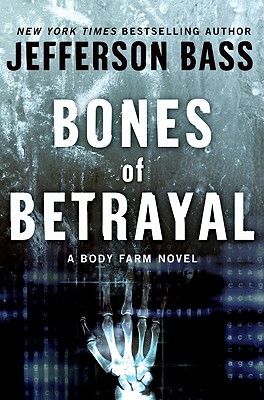
'Bones of Betrayal' Traces Oak Ridge History and the Making of the Atomic Bomb


Bones of Betrayal actually began as my least-favorite-thus-far Body Farm novel. I found it difficult to drum up interest in nuclear and radiological terrorism, which is the subject matter as the novel begins. However, that quickly changed -- so much so that Bones of Betrayal may actually be my favorite of the four books so far. It would be difficult to beat the second and third books being set partially in my former college town of Chattanooga (and its outskirts). But Jefferson Bass enters new territory in the fourth Body Farm novel -- historical territory.
Let me be the first to admit that history is not always interesting to me. I may or may not have made one of my poorest high school grades (and my only C in my entire high school career) in American History... Yes, that's sad. I love to read and to learn, but usually not things about history. Tennessee history is a bit different. I'm still never going to be a scholar in any kind of history, even of my home state. But there are bits that I find interesting, and the author team of Dr. William Bass and journalist Jon Jefferson wrote about just such a piece of history.
In Bones of Betrayal, Jefferson Bass explores the rich history behind the Tennessee city of Oak Ridge and the building of the atomic bomb during World War II. When an elderly scientist turns up dead, Dr. Bill Brockton (Dr. Bass's fictional stand-in) is on the scene. As Brockton and his colleagues investigate cause of death and work to find the murderer, they become entrenched in Oak Ridge's controversial history and relationship to the bombs dropped over Japan. Brockton begins interviewing a former Manhattan Project employee who has ties to the dead scientist, and the team of Jefferson Bass allows the elderly woman to narrate several sections of the novel in first-person voice.

Photograph of an Oak Ridge/ Manhattan Project billboard cautioning
workers to keep their work to themselves, thus furthering secrecy.

Bass includes a note at the novel's end delineating fact from fiction in the book. While the novel's main players and scenarios are fictional, Bass includes many historically accurate details of place and people.

For more reading on the history of Oak Ridge and the Manhattan Project, see the following resources online:

Wednesday, April 7, 2010

I'm Stuck On Repeat... 'The Devil's Bones' Is Just as Amazing as The First Two Body Farm Books (And I Can't Stop Raving!)


I know it gets tiresome to continually hawk the benefits of one author over and over (for three posts now!). But technically Jefferson Bass is TWO authors... So does that make it different? Probably not, but I don't care... The Body Farm series is continuing to entertain and amaze me, now three books in.

The third novel in the series, The Devil's Bones, continues the story of Dr. Bill Brockton, University of Tennessee professor and Body Farm founder. You need to read the first two novels to really appreciate this one, as it delves deeper into a storyline about a former-colleague-turned-murderer who still has a bone to pick with Brockton (pun intended).

Forensically, the novel discusses the affect of fire on bones. The book begins with a case of a woman who died in an automobile fire. There are reasons to suspect foul play, but the main suspect -- the woman's husband -- was thousands of miles away in Las Vegas at the time of her demise. Brockton conducts experiments to study the affect burning bones has on new and old bones. New, or "green", bones burn in a spiral pattern that develops from the moisture in them being released quickly, so that the layers of bone are almost steamed. Older, dry bones burn in a linear, heavily patterned way, much like old logs in a fire. Think about the end of logs burned in a fireplace or bonfire -- a crosshatch pattern. That's how you can tell the difference in new and old bones, therefore also being able to tell the difference between whether a body was burned soon after death or a lengthy amount of time after death.

To go along with the burning bones experiments, Jefferson Bass (a team of both Dr. Bill Bass, the actual Body Farm founder from UT, and journalist Jon Jefferson) also addresses a real-life case that I remember from my college years in Chattanooga. In 2002, a Georgia crematorium was discovered to have been not performing its duties as advertised (and as it was paid for). During a search of the property that resulted from anonymous tips to the GBI, more than 300 bodies were found buried and piled up on the property. The crematorium had been sending back to families a mixture of human and animal bones, concrete mix, and filler materials rather than the remains of their loved ones. Bass places Brockton thick in the middle of this case, one that was extremely interesting to me, as I remember vividly watching CNN's 24-hour coverage of the property search and ongoing investigation. Real-life Body Farm professor and author Dr. Bill Bass worked some of the cases, which gave him an inside view and factual representation of the story in this novel.

I think I've gone on enough... Go get these books! (My mom has them in hand and has already started the first one, soon to be followed by my other family members.)

Sunday, April 4, 2010

'Flesh and Bone' Proves Even Better Than Professor's First Body Farm Book


I always think it's amazing when I discover a whole series of mystery novels that I haven't really heard of before... That happened a few weeks ago when I found UT (that's TENNESSEE, thank you very much -- not Texas!) professor Dr. Bill Bass's books about a fictional forensic anthropologist who works at the Body Farm in Knoxville. I had previously heard Bass speak when his nonfiction part-biography, part description of the Body Farm's beginning was released several years ago. So I was aware that he had written Death's Acre. Somehow his crime fiction series had slipped below my radar, though.

I bought the first three novels together, because McKay's in Nashville had them; I figured even if they weren't great, I could make my way through them since they were set in Tennessee and were mysteries. I was pleasantly surprised to find that the series was really good. Bass has teamed up with former journalist Jon Jefferson to write these books under the pen name Jefferson Bass, and the two of them must have some kind of special writing chemistry, because it really works well.

I breezed my way through their first book, Carved in Bone, in just a couple of days. I think I completed the second, Flesh and Bone, in under 24 hours. It was just that good. I couldn't put it down -- I had to know what happened to Dr. Bill Brockton and how it happened. I'm now midway through the third novel (and a little panicky, because where am I going to find the other two?). My local library has copies of both the fourth book and the fifth, which was just released at the end of March. But who knows if they'll be in when I go this week...

Carved in Bone was fantastic (and you can read all about it just below this post in my review of it), but Flesh and Bone blew me away. It was so much more in-depth. The writing duo delved deep into Dr. Bill Brockton's character, and also fleshed out (like my verbage?) his friends and family, as well. In this novel, Brockton is helping Chattanooga's medical examiner Dr. Jess Carter pin down time frame in a murder case, when a second body pops up. When Brockton becomes the focus of the police investigation, he finds himself with a lot of alone time and few people to turn to. As the police focus on the evidence against him, he works to unravel the murder of someone close to him. Not only does Brockton want to clear his name, but he also wants to bring the real killer to justice.

One reason I loved this book so much is the setting. When Jefferson Bass describes place, it is dead on. Knoxville and Chattanooga fairly jump off the page, almost becoming characters in the story themselves. I lived in Chattanooga for almost five years while attending the University of Tennessee at Chattanooga, so it is a city near and dear to my heart. Any (good) novel set there is bound to become one of my favorites. I love this series so much I've been fairly lunging at family members, listing its virtues and promising everyone I know my copies when I'm done with them. That's how good these books are, and that's how much I want everyone I know to read them. Mystery lover or not, Dr. B will capture your attention and hold your interest. Tennessee residents and other southerners familiar with the area will relish in them, as well.

Friday, April 2, 2010

Tennessee Body Farm Founder Enters World of Crime Writing in 'Carved in Bone'


Several years ago I sat in an audience as slides of dead bodies in various stages of decay flashed on a large screen in the front of the room. We watched as a corpse went from whole and flesh-covered to maggot-ridden to bone in less than a dozen photos. While horrified, I was also intrigued. The speaker was Dr. Bill Bass, famed forensic anthropologist from the University of Tennessee in Knoxville, and he was discussing his book about his research, Death's Acre: Inside the Legendary Forensic Lab the Body Farm Where the Dead Do Tell Tales. After that nonfiction book was released in the fall of 2004, Bass and his writing partner Jon Jefferson teamed up on another project -- a fiction mystery series based on Bass's years working at the Body Farm.

The two combined their names into the pen name Jefferson Bass, and began a series detailing the personal and professional life of main character Dr. Bill Brockton. Brockton is a widower, currently married to his work only. 2 am phone calls asking him to appear at the scene of crimes are nothing out of the ordinary.

In the first book in the series, Carved in Bone, Brockton is called upon by rural Cooke County Sheriff Tom Kitchings to help solve the mystery of a body found mummified after 30 years in a cave deep in the Tennessee hills. Brockton willingly provides his services, but rethinks his involvement when things begin to get dangerous. Cooke County is a fictional county, perhaps loosely based on modern-day Union County, which was called Cooke County from 1797 until 1846. Cooke County is a backwoods area largely overrun by illegal activity. When Brockton begins to suspect that those in power are involved in crime, as well, he attempts to back out of the case. He is drawn back in by force (and even kidnapping, in a couple of cases), and works to solve the murder against his better judgement.

Jefferson Bass follows in the footsteps of Patricia Cornwell in this excellent addition to the world of crime writing. Cornwell actually propelled the real-life anthropologist Bass to fame when she included him and his Body Farm in her Kay Scarpetta novel named for the facility. The co-authors Jefferson Bass do a wonderful job of describing the east Tennessee setting, both in Knoxville and in the more rural areas. They also have created a lovable, intelligent, and caring protagonist who I look forward to reading more about.

The writing team of Jefferson Bass is currently on a book tour for their latest book The Bone Thief. I am already halfway through the second novel in the series, Flesh and Bone. More on this series to come soon (as I'm reading them as fast as I can get my hands on them)! Excerpts from their books are available at their website, including the prologue and first chapter of the first book.

You're very own look at the Body Farm in a tour by Dr. Bass himself (WARNING! VIDEO CONTAINS SOME GRAPHIC MATERIAL THAT MAY NOT BE SUITABLE FOR ALL VIEWERS. WATCH AT YOUR OWN RISK.):

Monday, March 29, 2010

'14' Tracks Nashville Serial Killer


Southern setting + mystery series + female author + female protagonist = a book I am definitely interested in reading. J.T. Ellison is a Nashville writer and the creator of the Taylor Jackson mystery series. Ellison combines all of my favorite things in this series. Taylor's story began with Ellison's 2007 debut novel All the Pretty Girls. The twenty-something Nashville homicide lieutenant rose through the ranks quickly and has made a name for herself among her peers at a young age. In the first book, she and the Nashville PD were helped by Taylor's love interest, FBI profiler Dr. John Baldwin, as they chased the Southern Strangler killer.

In 14, the second book in this series, Taylor and her team work to beat the clock and solve the Snow White murders. Taylor and Baldwin are scheduled to be married in just a few short days, and she can't bear the thought of leaving this case unsolved. The Snow White killer was a 1980s phenomenon who stopped killing and disappeared into thin air almost twenty years ago. When new victims begin popping up, the Nashville PD is determined to bring this long-term killer to justice. Things become complicated when Taylor's own father is named as a person of interest in crimes connected to the murders.

Ellison has created a strong female lead character with homicide detective Taylor Jackson. While not quite on par with experienced female mystery writers such as Patricia Cornwell and Sue Grafton, Ellison offers an interesting plot with likeable characters. This series is definitely a must-read for local Nashvillians (and those of us who live close enough that we consider it our own), and not only because it is chock-full of Nashville references.

Ellison is currently offering the first novel in this series as a free ebook download. Take advantage of the gratis reading, and jump-start your introduction to the Taylor Jackson series. Ellison has released two other Taylor Jackson books, and the series' fifth novel is set to come out in October 2010. She will be appearing in Nashville several times in the next few months; check out her tour schedule for dates.

LinkWithin

Related Posts with Thumbnails