This year it seems so apt, with the war in Iraq finally coming to an end and all those troops coming home for the holidays. I haven't heard much about this in the news. NPR did several days worth of coverage during my last week of school before Christmas break (when I was still driving to work each day and therefore, listening to the radio each day), and author Sara Paretsky posted this on her Facebook page a couple of days ago:
"We seem to have ended the war in Iraq with almost no acknowledgement in public. As the wife, daughter and sister of veterans, I'd like to thank the people who gave many years of their lives, those who gave their lives, those who gave their physical and mental health, to undertake this service. The transition home will not be easy for some, especially in this bad economy. I know there are many organizations out there to support returning vets; one that I give money to is Iraq & Afghanistan Veterans of America. If you have a favorite, especially one that helps with housing or jobs, please post it here. And may our troops in Afghanistan return to us soon."
Paretsky's 2010 novel Bodywork explored PTSD and its effects on military men and women traveling home. (Read my review of the novel here.) She also provided a link to the Iraq and Afghanistan Veterans of America website, which you can visit for more information. If you feel like you haven't done enough this holiday season, it would be a great way to finish off your giving.
Speaking of giving, my brother and his Mbegu Films endeavor now have a partner in SmallHD, a camera technology company that has worked on big Hollywood and NYC projects like Entourage and the Today show. Mbegu Films will strive to provide communication and education in East Africa on topics such as clean food habits, vehicle safety, and much more. If you're interested in giving to this project, or partnering with them in their quest for education, contact my brother Carson McNeal via Mbegu Film's Facebook page or by visiting the Mbegu Films website.
I don't know about you guys, but I am just about as ready for Christmas as I'm going to be! My gifts are (almost) all wrapped, house is clean, laundry going, groceries for Christmas dinner bought, and I'm about to head out for a last few items. Merry Christmas to you and yours. May you have a warm and cozy Christmas Eve.
Brianna Karp has lived a tough life, and she hasn't yet reached thirty. That's the basic idea behind Karp's newly released memoir, The Girl's Guide to Homelessness. I had mixed emotions about this book. First, the good things: Karp has an exceptional voice. She told her story flawlessly, her words perfect, tone measured, story interesting. She kept my interest throughout the book. She told a tale that was by turns shocking and heart-wrenching.
Karp divulges the details of her life thus far, from early childhood days spent tip-toeing around her bipolar mother to teenage jobs working full-time to support her family. She also recounts her formative years spent in the Jehovah's Witness church, which she refers to as "a cult". (In quotations because I personally know nothing about said church's doctrine and therefore cannot make a judgment call on this one. Also, I have known several people in the church who were actually quite nice and not cult-member-like at all.) She discusses her first "real" job making lots of money, and then the inevitable lay-off that occurred when the market took a down-turn. She is strong, and she has overcome much; that is evident in the book.
It would be nice if Karp's was a voice that could stand for the "new" homeless in America -- the homeless we Americans don't like to think about. Not the bum on the street corner muttering to himself, ragged jacket and two Wal-Mart bags slung over his shoulder. Not the toothless prostitute jones-ing for a next hit. But a homeless person who looks more like you or me -- fairly clean-cut, educated, dressed in regular clothes. Just fallen on hard times with no family to fall back on. That is the homelessness Karp wants to epitomize.
My problem is that she doesn't quite meet the mark. She overshoots a bit. Her memoir is finely-written, and she has a lot to say. But to call her the "new voice" of homelessness is a bit of an exaggeration. For one thing, she isn't exactly homeless. She lives in a trailer, although it is in the Wal-Mart parking lot without water and electricity. And she has both a job and other job opportunities, albeit crummy ones. She also has a laptop and a cell phone and receives unemployment benefits whenever she isn't working.
It's not that Karp's situation isn't dire or that I am trying to discount her tale. As I said, she has gone through many terrible things and survived. But to consider herself "homeless" and to call her book The Girl's Guide to Homelessness -- it just seems a bit much. After all, she borrows money at one point to go overseas to visit her fiance, met online via a homeless website. I have personally never been out of the country other than one trip to Mexico; it simply hasn't been within my budget.
Karp's memoir also takes a turn halfway through the book, from memoir about hard times to memoir about her new romance. She makes poor decisions, as many young people do in love. I won't spoil the book for you; it really is a good read. It is just a little more "Brianna Karp's memoir of her life so far" and a little less "girl's guide to homelessness."
So, it was killing me as I read – how much of the protagonist Troy Chance is you, or should I say how much of you is in her?
SJH: I think it’s common for first-time novelists to use a great deal of themselves in their first-person main character. Mine lives in the house where I used to live in Lake Placid and worked at the newspaper where I used to work, and many of her experiences and feelings are mine. We both like bicycles and computers and dogs and kids. And when I write her, I am her.
Are you a swimmer? Have you ever dived into Lake Champlain?
SJH: I love being in the water, but can’t say I’m much of a swimmer. I essentially learned to swim when I was living in Lake Placid – all my friends did the weekly mini-triathlons, and I was determined to. All I could do was the side stroke, but it got me there. While on a magazine assignment to a swim camp I was filmed underwater while attempting to do the crawl, which showed all the things I was doing wrong.
A diver I’m not – I think I only dived in anywhere twice, and that was to pass a water safety class I took in Ottawa. I’ve crossed Lake Champlain on a ferry, but don’t know that I’ve actually been in the lake.
What is the actual swim blog that's quoted throughout the novel? Is there an actual blog, or is it a compilation (or is it simply fictional)?
SJH: It’s an actual swim blog suggested to me as a possible source for my section titles. I pulled those quotes almost at random and stuck them in, but they seemed to fit those sections.
I know you have ties to the south (Nashville, I think). Why New York and Vermont? Isn't it cold there? It seems like such a foreign place to a southerner like myself...
SJH: I was born and grew up in Oak Ridge, Tennessee, and lived for years in Nashville. My first full-time job was in Adirondacks in upstate New York, the sports editor on the daily newspaper there, and I nearly froze my tail off, before I learned how to dress for the weather (layers, lots of layers, and Sorel boots with thick wool liners). Later, at a crossroads in life, a friend who lived in Vermont said, “Why don’t you come up here and work at the bike shop?” – I’m glad no one suggested going to work on a freighter or moving to Antarctica. But in many ways Vermont suits me – I run to the grocery store or post office in my ripped painting overalls. In Nashville (at least in Green Hills or Brentwood) I think you might be arrested for that.
Have you read Kathy Reichs' Tempe Brennan series (I won't say Bones series, because I think the books are very different)? I thought about the deep south/ Montreal connection from her books as I read your book.
SJH: I’ve read one and I remember that the southern scenes resonated with me. I like the idea of using place as essentially a character in the book, and in the sequel I’m finishing up now that comes into play even more.
I love your references – AND, I got them. Maura Tierney, Groundhog Day, Highlights magazine, Perry March and Susan Smith (those two you explain in the book). Do you think most readers would have connected so thoroughly to them? References I "get" make a book so much richer to me, yet authors sometimes leave them out.
SJH: It’s a tricky line to walk. I originally had more references but because I didn’t want to date the book or confuse or frustrate the reader I took some out (and the copyeditor, I seem to remember, wanted me to take them all out). But readers are a lot smarter than people give them credit for, and these and other references seemed integral to the book. And in these days of Google, if you don’t get something you can look it up in a heartbeat.
I took out most restaurant names, because restaurants change hands so often. But when I talk about getting an ice cream cone at Stewart’s or a certain type of bagel at Great Canadian Bagel – you can walk into those places and buy those foods there. And I counted the number of steps from that house in Lake Placid up to Stewart’s, a walk I took often when I lived there. I do love my ice cream.
Not to dwell on other series, but there seems to be something intrinsically Kinsey Milhone-like about your main character, Troy Chance. I also mentioned that I see similarities between her & V.I. Warshawski. Do you have influences from authors like Grafton or Paretsky? I suppose I also see Harry Bosch in Troy, since we met at a Michael Connelly event.
SJH: I read Sue Grafton and Sara Paretsky, years ago, as well as Karen Kijewski Stabenow, and loved that there were series based around a strong female character. But I’d say the authors who influenced the most were the ones I read when I was very young: Mary Stewart and her romantic suspense novels (if you haven’t read Nine Coaches Waiting, do so! I think I even named one character after a character in that book) and John D. MacDonald and his Travis McGee series (it’s no coincidence that this book’s integral scenes take place on or near the water). My novel references authors Ngaio Marsh and Leslie Charteris, you know those had an impact as well. While growing up our house was filled with books, some really old ones that my dad brought home from a second-hand store, so I read a lot of stuff other people these days may not have stumbled across (okay, I think I could have lived without the Elsie Dinsmore series, but there they were, so I read them).
I know there is a second book... And it is a Troy Chance novel, correct? So – series, or sequel only?
SJH: Series, as far as I’m concerned. I’ve got books 3 and 4 mentally roughed out, and can’t wait to write them.
Sara J. Henry and Dogs, Photo from SaraJHenry.com
Sara J. Henry is currently on book tour. To find out if she's coming to a city near you, check her schedule. I'm hoping to be there in March when she visits Nashville!
My favorite type of non-fiction is the foodie/travel/memoir. Kim Sunee did an excellent job with her 2008 book Trail of Crumbs, which details her story of adoption from South Korea to New Orleans, then eventual move to France, and now I've found my next Sunee -- Elizabeth Bard and her memoir Lunch in Paris: A Love Story, with Recipes. Bard is a journalist from the United States who found herself living in London, and then -- by accident of love -- in Paris.
As Bard recalls her romance with Gwendal, a Frenchman through and through, she examines her true ambitions and how they fit with her new life in a slow-paced city. And, of course, she details each meal. Bard includes a wide scope of all things French, from the open air markets where she buys vegetables each day to the butcher shop with its crazy schedule (closed Monday, open Tuesday through Saturday but closed from 1pm - 3:30pm for lunch, closed Thursday afternoons, open Sunday mornings). Most importantly, she discusses the importance of eating in France and its link to social customs. She talks in detail about the food served at her wedding, the sixteen-course North African meal served on New Year's Eve by her brother-in-law, and a Passover feast she herself prepares.
Included throughout the memoir sections are recipes, which Bard explains are just starting points -- with each, she offers other ingredients which could be used, variations on preparation, and multiple serving suggestions. Some are not things I would probably ever make (I'm not even sure where I would find whole Octopus in the middle of Tennessee in order to make a salad...), but others are excellent -- a chocolate souffle cake and a method for cooking fish wrapped in packets in the oven come to mind immediately as recipes I will try in the near future.
Bard writes a foodie blog called Lunch in Paris, where she continues to share daily recipes.
I don't remember reading Lori Lansens's second novel The Girls. The title and her name sound so familiar, but in reading the summary for it, nothing sounds like a book I've read. Many readers will remember her from that bestselling novel, but she writes a very different story in her latest release. In The Girls, Lansens explored the story of a set of conjoined twins. In The Wife's Tale, Lansens has a single narrator, one who is isolated from the world around her.
Mary Brody Gooch is a housewife. No, not the kind you see on Bravo's television series, with diamonds dripping and fake tan brightly displayed. Rather, she is morbidly overweight and hasn't shared a bed with her husband in more than six years. An only child, Mary's mother is now confined to a local nursing home and her father recently passed away. Alone in the world except for her husband and her cat, Mary eats her way from sunrise to sunset, trying to cram enough food into her body to fill the hunger she feels constantly. She works part-time at the local pharmacy, but often finds herself the butt of jokes.
During a brief period in high school, Mary found herself thin; it was at this moment that she met her future husband, a high school athlete who wouldn't have given Mary the time of day before. But as the years pass by, she slowly adds weight back to her frame, and at the same time, a blanket of melancholy over her soul. Then one day, not too long after the passing of her cat and her father in quick succession, Mary's husband doesn't come home. As she sets out on a journey to find them and make things right between the two of them, she loses her appetite and some of those excess pounds. Simultaneously, she finds herself.
What sounds like a cliched tale actually develops into a story full of emotion and beautifully written by Lansens. It is multi-faceted and unexpected in its surprisingly fresh minor characters and nuances of plot. Although I found some parts of the novel a bit slow-moving for my taste, I relished in each new-found joy Mary discovered. I also wanted to know what would happen at the end. Would they get back together? Would Mary find who she truly wanted to be? Ultimately, would Mary ever be happy? While Lansens does not deliver a cut-and-dried, happily-ever-after ending to the novel, she leads the reader through the emotions felt by Mary and I believe you could say Mary triumphs in the end.
Read a fantastic interview with Lori Lansens from author Joshilyn Jackson over at Faster Than Kudzu to learn more about the author and her three novels, including this one. (Oh, and on a side note? I really, really thought I entered the contest to win a copy of this book. But in scanning the comments, can't find my name anywhere. I was so disappointed when I didn't win... The moral? Double-check yourself if you really want to win a contest!!)
It is rare that I find a memoir I can't put down. I usually scan and skip over several sections (or even chapters) while reading about someone's life. As a lifelong fiction addict, I just can't make my ADHD mind focus on a story that isn't made up. That sounds kind of crazy, I realize. There are many people out there (my sports- and news-only-reading boyfriend, for one) who ONLY read nonfiction. I am not one of those people, and it's rare that a piece of nonfiction holds my attention for a full book.
Heather B. Armstrong's memoir about pregnancy, delivery, postpartum depression, and finding her way out of the dark and back into the light was an exception. I may have mentioned that I've recently become a huge blog follower. I don't follow a large quantity of blogs, but those that I do follow, I try to catch up on daily. After reading an article on CNN about anonymous bloggers being revealed, I found Armstrong's blog and I've been hooked ever since.
On the surface, it doesn't really make sense. Armstrong is a mommy blogger, a specific category of blog writer whose blogs are centered around her family and children. As someone who doesn't have any kids (save a not-quite-stepson), it seems strange for me to read blogs about breastfeeding and birthing babies. However, Armstrong brings a lot more to the table in both her blog and her memoir It Sucked and Then I Cried: How I Had a Baby, A Breakdown, and a Much Needed Margarita.
For one thing, she has a wry sense of humor that resonates throughout the book. Her approach to mothering is loving, yet real. In one of her monthly letters to Leta, her firstborn daughter about whom the book is based, Armstrong writes:
Dear Leta,
I have fed you twice a night every night for the past eighty-four days, and I have to ask you: aren't you full yet? This week you turn three months old, and your father and I can't believe we have made it this far. The past few weeks have seemed like some sort of hazy acid trip, not that we would know what an acid trip feels like because . . . . Drugs are bad and you should say no to drugs, but Advil is totally okay, and can I tell you how happy I am that I get to take Advil again? When I was pregnant with you I wasn't allowed to take Advil, and whenever I had a headache or a sore muscle your father would take a handful of Advil and stand close to me in hopes that his nearness would soothe me. Now I just sprinkle a few capsules in my breakfast in the morning. . . .
In order to find that passage, which I think is both witty and still communicates BIG HUGE LOVE to her daughter, all I had to do is flip to the middle of the book. In fact, if you flipped to almost any page in the book, you would find a similarly-clever passage which you could in turn share with other friends! Armstrong is funny in an understated way (not a big, over-the-top way like Kathy Griffin, whose memoir I have also recently written about), but she also is glaringly honest about a not-so-funny part of having a baby -- postpartum depression. Yes, this is the disease that Brooke Shields also wrote and spoke frankly about, the same disease which (the mentally ill in his own right) Tom Cruise discredited days later on national television. You can read Brook Shields answering article to Cruise's claim if you're interested, or you can read her book Down Came the Rain: My Journey Through Postpartum Depression. I can't speak for it, as I haven't read it (yet), but I can speak for Armstrong's book, and I say READ IT. As a woman who might one day have a baby and experience postpartum depression, you should read it. As a man who might one day be a husband to a wife who has just had a baby and experiences postpartum depression, read it. As someone who might one day know someone who has a baby and experiences postpartum depression, READ IT.
In addition to her bluntly honest account of what being a depressed person feels like, Armstrong's writing strength also lies in her ability to convincingly describe her relationship with her husband and fellow blogger, Jon. In an age when reality television's Jon & Kate renew their vows on a sunset beach and then months later go through a very public divorce, it can seem that "true love" is something only seen on a Hollywood set. Armstrong tells us differently. You can feel the emotion dripping from the page when she writes: "In him I'd found the person whom I knew I would never get tired of, even in the most monotonous of times, even in the routine of being together every single day. I never thought I would find that." She thanks him in her ending acknowledgments as "[her] soul mate, he who did not leave [her] when he had every reason to do so. This book is a love letter to him."
Enough of my singing her praises. Go get the book and READ IT!
As I'm sure many, many people out there have been waiting with bated breath to find out which books I chose off the "beach read" list, I'll finally end the suspense.
I began the trip with an audio book version of Barbara Delinsky's The Secret Between Us. I have enjoyed past novels of hers, including The Woman Next Door and Lake News. After beginning this novel, however, I felt unable to continue listening. The story seemed contrived -- a woman and her daughter hit a man on a rainy road, the man turns out to be the daughter's teacher, and the woman takes the blame to "save" her daughter. I never really got far enough to judge properly, but it does say something that I fell asleep during the first CD... Maybe I'll give it another try (but not very likely).
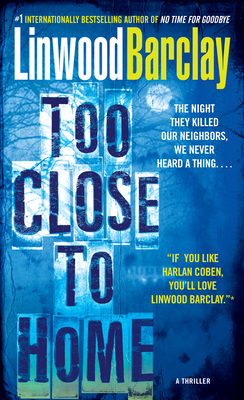
When I woke from my nap, I started reading Linwood Barclay's mystery/ suspense novel Too Close to Home. Again, a slightly contrived storyline (I won't give away the ending, but the plot evolution is far-fetched). This time, however, there were several redeeming qualities that kept my attention. The novel opens with an attention-grabbing triple murder. Initially written in third-person from the point of view of a teenage boy, Barclay then switches to first-person perspective in the voice of the boy's father. Jim and Ellen Cutter have had their share of problems -- extramarital affairs, fits of temper, job loss, teenage pranks from their son. Their lives get a lot more complicated -- and dangerous -- when their next-door neighbors are killed. Barclay develops the character of Jim Cutter in a way that makes the reader care about him. He also provides interesting subplots which intertwine with the main plot in a myriad of ways. The surprise ending -- however unbelievable -- is unexpected and creative.
NOT ON THE LIST: I also finished a novel I'd been reading off and on for several weeks, The Girl Who Stopped Swimming by Joshilyn Jackson. While I took issue with the undeveloped supernatural elements in the novel, Jackson's story of sisters with a difficult past and relationship is intricate and beautiful. Hailed as a modern southern gothic writer, Jackson describes Laurel and Thalia's ancestors' small town perfectly. The town of DeLop, Alabama, is realistic in its portrayal of the despair that exists in places with deep-seated poverty. Jackson juxtaposes trailer-ridden DeLop with Laurel's new suburban Florida town, rich with McMansions and gated communities. Laurel's newly found perfect existence is threatened when her preteen daughter's friend Molly drowns in their backyard pool. As Laurel searches for the truth behind what happened that night, the ghost of Molly appears to Laurel and brings all the ghosts of Laurel's past with her. Jackson writes the kind of novel I like best -- southern, female, and with a tortured protagonist thrown into the mix. While I'm not much for ghosts as characters in fiction, this novel shines nonetheless. Jackson also writes her own blog about life in the deep south called Faster Than Kudzu.
My nonfiction pick for the week read like a novel, but told the real-life story of Leslie Morgan Steiner and her first marriage. Steiner's memoir Crazy Love tells the events leading up to her first marriage and the warning signs she should have seen that the person she was walking down the aisle towards would almost kill her one day. Steiner, a successful business executive and mommy-blogger, details being choked, pushed down stairs, and having a gun held to her head. Coming from a wealthy family and being a Harvard graduate, Steiner breaks the stereotype that all battered wives are uneducated and living in trailer parks. She pleads with readers through her story to have hope if they are living in the same hell she experienced, or to understand if they know someone who is. She talks about turning away from people at cocktail parties who discuss domestic violence as if it were the woman's problem. Why, they ask, doesn't the beaten woman just leave? Steiner attempts in her memoir to help outsiders understand the difficulty in breaking the cycle. Steiner was interviewed about her book on NPR's All Things Considered. The interview provides information on everything from her family's reaction to Steiner's opinion on Chris Brown and Rihanna's tumultuous relationship.
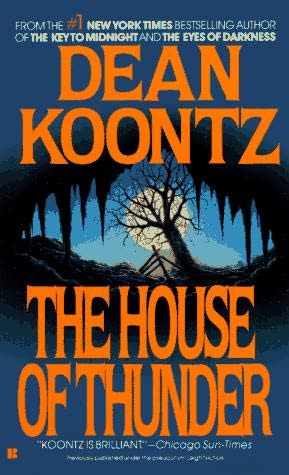
I began Dean Koontz's The House of Thunder on the way home and I've hardly been able to put it down. I even packed it in my work bag this morning with the hope that I might have a moment at lunch to peek at what happens next. That didn't happen, but I'll return to it as soon as I finish this post (well, it and DVR-ed episodes of Project Runway). I never knew that Koontz wrote such scary novels, but (in this one, at least) he does. This is my first Koontz read, and while the plot has my attention, he isn't the best writer out there. Plot drives a novel, though, and Koontz definitely has that wrapped around his finger. Full review when I complete it!
I finished Jennifer Lancaster's Such a Pretty Fat in the wee hours of morning today. Let me just say "aahhhhh". It was so refreshing and so well-written and just darn good! It is the opposite of what I go looking for on a library or bookstore shelf (my go-to musts are southern/ female author/ modern fiction), but I am so glad I have discovered her.
I read her newest book Pretty in Plaid a week or so ago because it was on the "new book" shelf at my local library; well, that and it was so cute with it's pink and green argyle tights on the cover. It was hilarious and fantastically written. I placed a hold on Such a Pretty Fat the day I turned Pretty in Plaidback in.
Such a Pretty Fat was so captivating I found myself sneaking glances at red lights and straight stretches of long roads... Don't call the highway patrol, please. I pay attention to the roadway, and I'm an excellent driver. I just need some entertainment every now and again during those boring parts of driving. Lancaster's escapades definitely offer her readers entertainment. From tales of her personal trainer Barbie (yes, that is her name... and don't think Barbie dolls & ball gowns... think Jillian from The Biggest Loser) to tales of the mole on her Jenny Craig counselor's chin, Lancaster hits the nail on the head each time. I laughed uproariously (even when other people in the room looked at me strangely), but she isn't outrageous. She's the girl-next-door, your best friend from the office, saying all the things you wish you could say.
As she writes in her footnotes (a personal-writing-style plus, in my opinion, because they often deliver the funniest lines in the book), all these books and more "are available now at your local booksellers. Purchase your copy today!" Now having read Pretty in Plaid and Such a Pretty Fat, I'll have to purchase the other two: Bitter is the New Black and Bright Lights, Big Ass.
If you finish all the books and you're left feeling utterly Jen-less, you can always visit her blog Jennsylvania for continuous updates and humorous stories.
Just to brighten your day, here's a look at Jen herself talking about the book (and you get a glimpse of the real-world trainer Barbie!):
I picked up a bargain-priced paperback version of Julie Powell'sJulie & Julia during a midnight Wal-Mart run a few weeks ago. I wasn't sure if I would like it. After all, I'm not much of a blog reader, other than for a few friends and family.
Well, I should say I WASN'T much of a blog reader. That is, until I found a couple of good blogs via www.blogger.com's "Next Blog" feature. I began "following" them, for something interesting to read. Then I bought Julie & Julia. I didn't begin reading it until just a few days ago. In between the buying date & the beginning-the-book date, I browsed the web for Julie Powell's actual blog. I found her (now-defunct) original Julie/Julia Project blog. I wasn't really that impressed. Now, because I had neither read the book or watched the movie, I must admit I didn't have a vested interest in reading the blog. I was just browsing/ scanning.
Then I read a story on CNN.com about bloggers who were formerly anonymous and who were fired after they "came out," among them Heather B. Armstrong. So, of course, I googled Heather and found her blog Dooce. And started following it. And read about three months' worth of back blogs. Then I continued my blog-craziness by reading Jennifer Lancaster's blog Jennsylvania because I read her (very fabulous and funny) memoir Pretty in Plaidrecently. So in short, I became very interested in not only writing a blog, but also in reading them. They're pretty good. You should try them out (especially the ones mentioned above!).
Anyway, after/during all of this blog madness (which I must admit, partially came because for a week or two I could just not find a book I wanted to read -- which KILLED me), I finally pulled the Julie & Julia paperback off the shelf and started reading. And loved it.
Julie Powell is intensely funny, extremely profane, and -- most importantly -- a "real" character. I suppose this might be because she is a real person... But in saying she's "real," I mean more than that she is simply alive. She's flawed, and she loves her husband but is annoyed by him, and she loves her mother but is annoyed by her, and she has wonderful (crazy) friends who she loves but doesn't always treat properly. She's stuck in a dead-end secretarial job and she feels sometimes that even though she has a good husband and an income and an apartment in New York, she might never want to get out of bed (or stop drinking gimlets). THAT is why I like Julie Powell. And it's also why I have been devouring her book, much as she devoured every meal Julia Child lays out in Mastering the Art of French Cooking during her year of cooking and blogging.
As soon as I'm done, I'll read the backlog of blogs on Julie's current blog What Could Happen?


 on Amazon.com
 , which details her story of adoption from South Korea to New Orleans, then eventual move to France, and now I've found my next Sunee -- Elizabeth Bard and her memoir
  . Bard is a journalist from the United States who found herself living in London, and then -- by accident of love -- in Paris.
 , Lansens has a single narrator, one who is isolated from the world around her.