206 Bones is the latest book in the Tempe Brennan mystery series by Kathy Reichs. In the novel, Tempe revisits her old stomping grounds of Chicago, with Canadian detective Andrew Ryan in tow. Ostensibly in town to deliver a local body found in Montreal and to discuss the case with the Chicago coroner's office, the two also end up making a holiday visit to Tempe's ex-husband's family. Tempe is actually invited, as she is every year, but Ryan somehow makes his way into the fold and into the family's hearts -- much to Tempe's chagrin. Then the two are pulled back to Montreal with a new twist in the case.
I have to admit when I read that they were returning to Montreal rather than continuing their sojourn in Chicago, I was disappointed. Reichs had done well with setting the scene in Chicago, from explanations of the El to the multi-layered streets lining the Chicago River. I felt that the movement back to the oft-visited setting of Montreal was a way of returning to the safety of the known, rather than forging through a new experience. But I soon forgot about my disappointment, as the plot pulled me forward.
For the first time in many books, Reichs didn't focus on one specific topic (biker wars, DMORT's body recovery process, etc.), but rather just told a story involving Tempe. And Tempe was truly the star of this novel -- not her relationships (although, of course, there is continuance of the ongoing Ryan romance), not her family members (even though in-laws are present for some) -- just Tempe. Interspersed with the forward action was also a new element to the series: scenes of a missing Tempe. As she struggles to free herself from wrist and ankle constraints, and then to figure out where she is, Reichs throws readers bits and pieces of a captive Tempe. These are mixed into the regular action of the novel, so that in reading the background occurrences, suspense builds for the reader.
In 206 Bones, Tempe works on the Chicago case, examines other elderly missing women, seeks answers for a family missing since the 1960s, and deals with divisiveness within the pathology department. Meanwhile, readers attempt to figure out beforehand who has captured Tempe and is holding her within a black, unidentified space.
My only gripe with the book is in its final pages. Reichs attempts at that point to bring in a lesson, alluded to in very small ways throughout the book. Tempe and Ryan are discussing recent events, and Tempe goes into a stilted speech about credentials and licensing for forensic anthropologists. A valid point, but one perhaps better left to government hearings or professional conferences. Rather than talking like Tempe, the protagonist's words seemed lifted from a speech script Reichs might have written for herself in a professional setting. Still, two pages of awkward conversation a good book do not ruin. 206 Bones is yet another excellent entry in the Tempe Brennan series. Now I have no books to go until the new novel is released in August!
A CNN interview with Kathy Reichs, speaking about this novel:
Columbia professor Joy Harkness is offered a large sum of money to leave her current position and take a new one at Amherst College in Massachusetts. As she dines out with two spinster sisters the night before her move, she realizes that she has very little to show for her decades in New York City. In fact, she knows very little about these two women, very likely her closest friends there. Joy had big dreams when she moved to the city -- shopping at smart shops, dining out at the best restaurants. Somehow, all that fell apart once she actually lived there, and now she finds herself 48 years old, entirely alone, and very much outside the loop of what is "hip" and not.
From the beginning, Amherst is a very different sort of experience for Joy. She shares an office suite on campus with a vivacious French professor and a chummy sort of secretary. They bring her into their fold as though they've known her always. Soon Josie, the French professor, is bringing in gourmet picnic lunches for the three of them to share and inviting Joy to her home for dinner. Josie goes so far as to call a handyman to come and begin work on Joy's recent purchase -- a huge Victorian in a state of disrepair. Although she makes every attempt to maintain her distance, slowly but surely Joy is pulled into a circle of friends unlike anything she's ever experienced.
I enjoyed Diane Meier's first foray into the world of fiction with this debut novel The Season of Second Chances. Known for her book about the changing customs in modern marriage ceremonies, The New American Wedding, and for her work in the field of marketing, Meier has created an exceptionally well-written first novel. The book's cover gives readers a hint of the style to come within its pages. One of my favorite parts of the novel was the attention to the details of home that Meier includes. As Joy renovates and redecorates her house with the help of handyman and historical home expert Teddy, Meier provides lush descriptions of the colors and fabrics used.
I also enjoyed the slice of academic life portrayed in the novel. The Season of Second Chances is set in a college town and on a college campus. Although never overbearing, Meier includes an array of interesting scenes from Joy's life as a professor. Joy was recruited by an Amherst professor to participate in a cohort of professors who are developing a new style of teaching. They plan to begin with a set of courses on Shakespeare which will blend subjects together in a new way; while teaching Shakespeare, professors will include historically accurate information in subjects such as science, social sciences, and mathematics from Shakespeare's time. Although not a large part of the novel's action, Meier included enough to keep me interested in that piece of the plot throughout the book.
Want to know more? Look to these reviews for a more in-depth analysis of the novel:
Jeanette Walls' first book stayed on the New York Times bestseller list for more than 100 weeks; it won awards, and has been purchased by Paramount to be made into a major motion picture. How does an author follow an initial success of that enormity? Well, if you're Walls, you write a second book that's every bit as good. Although I have read some comparisons that put 2005's The Glass Castle at a slightly higher rank than recent release Half Broke Horses, most reviewers have unabashedly enjoyed Walls's newest book and praised its merits as entirely separate from the widely-read 2005 memoir.
Half Broke Horses is the story of Walls' maternal grandmother Lily Casey Smith, told in first-person narration rather than as a biography. As a result, the book reads like a memoir, although written by the protagonist's granddaughter. Walls writes in the foreword that she never actually intended to write her grandmother's story; Lily Casey Smith died when Walls was eight years old, so most accounts of her were heard secondhand by the author. But in trying to put her mother's story to paper, Walls ended up with the story of her grandmother instead. What results is actually a blend of her grandmother's life and a telling of how her mother -- made famous in Walls' memoir The Glass Castle -- ended up the restless soul she is.
Smith was born and raised in the West, back when it was still Wild. Smith's grandfather was a rancher, and he owned thousands of acres of land in New Mexico. Her father struck out on his own after his father was murdered, and Smith was born in a small dugout house in west Texas. Walls details the difficulties of life on the range, as well as the tenacity such a life instilled in Smith. Lily Casey Smith was a self-proclaimed adventuress, and in her lifetime became a teacher, a divorcee, a pilot, a rancher, a horse tamer, and a mother. She tried her best to teach her children life lessons that would help them in the long run; in the process, she helped shape a creature hell-bent on freedom -- Walls' mother Rose Mary.
At the same time, Dad was working on a book arguing the case for phonetic spelling. He called it A Ghoti out of Water. "Ghoti," he liked to point out, could be pronounced like "fish." The "gh" had the "f" sound in "enough," the "o" had the short "i" sound in "women," and "ti" had the "sh" sound in "nation."
Dad also started a biography of Billy the Kid, who had stopped at the Casey Ranch when Dad was a teenager and asked to swap his spent horse for a fresh mount. "Right polite feller," Dad always said. "And sat a horse well." It turned out the Kid had been on the run, as Dad found out an hour later when a posse stopped and also asked to swap horses. Dad, secretly rooting for the Kid, passed off some old nags on them. Now, in New Mexico, he became so obsessed with the Kid that he put a tintype of him on the wall. Mom hated the Kid, who she called "two-bit trash" because he'd killed a man who was engaged to her cousin, and she hung that fellow's picture next to the Kid's.
But Dad felt the cousin must have deserved to die. The Kid, he said, never shot anyone who didn't need shooting. . . .
His biography was going to vindicate the Kid, prove that Dad, despite his speech impediment, was better with words than anyone who'd ever laughed at him, and make us more money than we'd ever make growing peaches, pecans, tomatoes, and watermelons. Westerns sell like hotcakes, he kept saying, and besides, a writer's got no overhead and he never has to worry about the weather. (p.35-36)
Famous for her talk show Chelsea Lately on entertainment cable channel E!, Handler dated the CEO of the network for several years. Chelsea Chelsea Bang Bang is a collection of stories about Handler's everyday life, many of which involve that former significant other Ted. Much of her life revolves around making him look like a fool with elaborate pranks, imbibing in lots of vodka and illegal substances, and hanging out with unsavory characters.
In fact, Handler seems to be a magnet for odd characters, as evidenced by her sidekick Chuy on the show and by the menagerie of people who she writes about in the book. In this collection, Handler does drugs with her brother on Martha's Vineyard, flies away from a friend's rooftop L.A. wedding in a helicopter (so that she & Ted can make it more quickly to a weekend away in Orange County -- a whole 30 miles to the south), and vacations in the Caribbean with her New York City driver (so that she can help him find love).
Is Handler's book likely to make its way into the literary canon or to change literature as we know it? Definitely not. Is it a fun book to read in bits and pieces? Absolutely. Handler's tales are cringe-worthy at some points, so much so that I had to lay the book down some nights without finishing the particular story I was reading. Her attitude towards her father, especially, had me wincing at times. But if you enjoy her off-brand of humor (and watch her show), you'll laugh out loud at many of her crazy antics.
ChittyChitty Bang Bang clip, apropos nothing (well, except for my brain's insistence that it must have something to do with this book):
Body Farm founder Dr. Bill Bass continues his semi-autobiographical mystery series with a fifth entry, The Bone Thief. He and his writing partner Jon Jefferson form the team known as Jefferson Bass, and together they bring life to fictional forensic anthropologist Dr. Bill Brockton. Readers following the series have seen Brockton through good times and bad. Most recently Brockton lost yet another love interest when she fled after her heinous crimes were discovered. As The Bone Thief opens, Brockton is simultaneously mourning her loss and beating himself up over falling for such a flawed woman.
Jefferson Bass does an excellent job of intertwining Brockton's personal life and its developments with specific themes in each book. The series flows together through Brockton and other recurring characters (I wouldn't recommend reading the books out of order), yet each book stands alone with a particular focus. For example, the first novel in the series took a close look at small-town politics and the Smoky Mountain gensing trade. Subsequent novels have delved into real-life cases such as the Tri-State Crematorium scandal, the Scopes trial, and the making of the atomic bomb in Oak Ridge. Jefferson Bass stays true to Tennessee, describing locations in Knoxville and the surrounding area in close detail that's sure to thrill local readers.
The Bone Thief is set in Knoxville and also in Las Vegas, a trip that's a first for the series and for Brockton. The book continues story lines set in place by previous novels, most specifically the injuries sustained by medical examiner Dr. Garcia in the fourth book. As Garcia researches the possibilities that exist to rebuild his damaged hands, Brockton is approached by FBI agents to help them with an undercover sting aimed at the black market trade of organs, tissue, and bodies. Brockton hesitatingly agrees, but regrets the decision later when he becomes the target of blackmail and loses the respect of those outside the investigation.
Lisa Lutz first introduced Isabel Spellman and lunatic-ridden family in her 2007 debut novel The Spellman Files. The Spellmans run a family-owned private investigation agency in San Francisco, but they are far from your typical small family business owners. They are each other's worst nightmare. In fact, they spend almost as much time spying on one another as they spend conducting investigations for paying customers. Izzy, the narrator, is the thirty-something middle child who never grew up -- or, at least it took several extra years. In the previous three books, she gets into all kinds of trouble. In this fourth (and I've heard last) installment, Izzy is a bit more level-headed, but the rest of the family continues with their crazy antics.
I really don't want to give away the storyline of the previous three installments in the series, so instead of focusing solely on The Spellmans Strike Again, I'll introduce you to the cast of characters:
Albert Spellman: The patriarch of the family, he's an ex-cop who bought the business from an old-school private investigator. So far, he's made a decent living for his family. Although sometimes slightly sneaky, he's actually the quiet one.
Olivia Spellman: Mother and number one family spy. And by family spy, I mean the one who spies on family members the most. But, after all, she's the mother -- it's her job to make sure her eldest isn't cheating on his wife and to ruin Izzy's going-nowhere relationships. If she didn't have her children's lives to meddle in, what fun would life be?
David Spellman: The oldest and only male Spellman child, he's also the only semi-normal member of the family. Although in the last book, he made that a subject of much speculation (and spying, of course). Once a stable, employed and productive member of society, he's recently become both unemployed and divorced...
Isabel Spellman: Protagonist, middle child, and perpetually rebellious adolescent (even after 30). However, recently (as aforementioned) she's become ever-so-much more mature. Except in relationships, as she's currently seeing the bartender at her local bar, primarily for convenience's sake. She would be there anyway; he would be there anyway... You get the picture. Might as well date, right?
Rae Spellman: The youngest sibling (currently still in high school), she is the true wild-card of the bunch. A genius, but a misguided one. She's gone missing (The Spellman Files -- Book#1), stalked a policeman (Curse of the Spellmans -- Book#2), and forever seems to be torturing her family (all 4 novels). When she wants something, she goes after it with all guns blazing -- and she always wants something.
Intertwined with the Spellman family members is a recurring cast of characters who are hilarious in their own right. Izzy's best friend is the 80-plus retired lawyer Morty; Rae's policeman crush-turned-best-friend is the health-fanatic Henry Stone; and various others round out the novels perfectly.
Besides Lutz's obvious talent with humor, the best thing about these books is the refreshing style -- both in writing and in layout. There are no chapters, but rather transcripts, case files, and phone calls. (For example, headings such as "Phone Call from the Edge #17" and "Rule #40 -- Learn Some Manners".) Lutz also employs a frequent use of footnotes, which adds abundantly to the reading pleasure. An excerpt to prove my point:
Phone call from the edge #19
[Transcript reads as follows:]
MORTY: Izzele, tell me everything that's new. ME: I have some information and I don't know what to do with it. MORTY: I'm all ears. ME: You are, aren't you?ª
---------------- ª Morty's ears are positively enormous. (p. 111)
Lisa Lutz is a masterful writer whose series includes both likeable, although crazy, characters and exceptional writing. I love the Spellmans in all their madness, and I think you will, too. There is also talk of a movie version coming soon!
A little bit of info on Lutz's inspiration for the novel and her own experience as a PI:
I look forward to books coming out like other people look forward to summer blockbuster movie releases. So what books can I absolutely not wait for this year? Here's my list of recent and upcoming releases:
On Folly Beach by Karen White (May 4, 2010): I went to Folly Field Beach a few weeks ago. Wrong Folly Beach, but right ocean (Folly Field is on Hilton Head Island, while Folly Beach is nearer to Charleston). Still, just visiting South Carolina and the Atlantic Ocean made me want to delve into this new release.
The Nobodies Album by Carolyn Parkhurst (June 1, 2010): Parkhurst's The Dogs of Babel was one of the most engrossing novels I've ever read. That being said, if I had gone solely on its description, I never would have chosen it as a title I would enjoy. Although this book's summary doesn't scream "me", Parkhurst's excellent narrative voice leaves little doubt in my mind that I'll enjoy Nobodies just as much.
Lowcountry Summer by Dorothea Benton Frank (June 15, 2010): I've read every novel written by Frank, and I don't plan on stopping anytime soon. I'm glad she has slowly been returning to the scenes of her previous novels to write follow-ups. (This is the second which will follow Plantation, after last year's Return to Sullivans Island.)
uncharted terriTORI by Tori Spelling (June 15, 2010): I don't care what anyone says, I'm a Tori Spelling fan. I loved 90210, I've watched Tori & Dean from its inception at the Inn, and I've read her previous two books. I'm positive this one will be just as entertaining.
Sizzling Sixteen by Janet Evanovich (June 22, 2010): Sometimes Evanovich misses, but most of the time she's writing successes. No matter how good or just-okay this novel is, I can't wait to plunge back into the world of Stephanie Plum and friends. Especially Ranger. And Morelli, come to think of it. Okay -- Lula and Grandma Mazer rank pretty high as well. Jersey it is.
Faithful Place by Tana French (July 13, 2010): French writes dark, deep literary mysteries. Her first two novels, In the Woods and The Likeness were related, following the character Cassie Maddox after she works with Rob Ryan. This one promises to do the same, but moves backwards rather than forwards in time to Cassie's original undercover trainer, Frank Mackey and how he became involved in police work.
Burnt Mountain by Anne Rivers Siddons (August 11, 2010): As with many authors I like, I've read each of Siddons's books (fiction and one non-fiction). This title was listed to be released in August. For some reason, Amazon no longer offers it for pre-sale, and Borders says it won't be released until July 2011. I guess we'll see, but I'm sure it will be amazing whenever it comes out.
Spider Bones by Kathy Reichs (August 24, 2010): That's right! The thirteenth book in my beloved Tempe series is due out this summer. Who knows what creepy bone capers Reichs will send her protagonist on in this latest Bones-inspiring novel.
The Reversal by Michael Connelly (October 5, 2010): Michael Connelly is another one of those authors -- love him (even in person!) and have read everything he's written. The newest details a joint effort by both police detective Harry Bosch and his lawyer half-brother Mickey Haller.
Port Mortuary by Patricia Cornwell (November 30, 2010): Scarpetta is back in another new release. The medical examiner reportedly tells her own story (first-person) in this novel and returns to her long-abandoned military ties. Those in the know describe this as a throw-back to the first Scarpetta novels, so I'm sure to like this more than some of the newer, more flashy novels Cornwell has recently released about the ME.
I've been reading the entire Tempe Brennan series for the past few months, and sadly I've almost finished. Over the weekend, I read the eleventh (and next-to-last in the series thus far) book in the series. At this point, I have only one book left... But it's actually perfect timing, because Kathy Reichs will release another Tempe book in August. So one left to enjoy, and then a new book to read soon.
Devil Bones is the book Reichs has been leading up to with all of her other books. Reichs stated in a Q&A section at the end of the novel that her hope is that Tempe is both a professional with a depth of knowledge and an approachable character with whom readers feel a connection. She accomplishes this in various ways -- Tempe's constant romantic struggles, her unwavering devotion to her job, her alcoholism, and her conflicts with and love for her daughter. In Devil Bones Tempe finds herself in situations which address all of these real, human struggles.
While Tempe is in Charlotte for the fall UNCC semester, a plumber finds a gruesome discovery in a local basement. The organization and placement of the bones found are reminiscent of rituals, possibly from the fringe religion Santeria. Although the house has been empty for some time and is undergoing renovations by the new owners, Tempe and police investigators Slidell and Rinaldi soon find that the former tenant was a Santero, or healer. When two separate bodies turn up with signs of Satanism present in the killings, the team is led to investigate a local Wiccan man. The murders and bone discoveries, along with the possibility of them being linked to Satanism, stir up a political storm unlike anything Tempe has faced. Her temper flares, with disastrous results. To complicate matters, Andrew Ryan enters into the picture all the way from Montreal, and an old flame returns through Tempe's daughter Katy. Tempe is tempted more than ever by the warmth and numbing effect of alcohol, and for the first time we see her fail in her attempt to refrain from drinking.
Definitely one of Reichs's best entries in the Tempe series, the book also gained fame for being more than a good piece of literature. United Kingdom man Roshan Dantis cited the novel as inspiration for a murder he committed. In fact, Dantis renewed his library copy of the book just after murdering his friend's wife. In a statement about the murder and the claim that her book had anything to do with Dantis's actions, Reichs denied such a connection.
Let me be blunt. You need to find a copy of Joshilyn Jackson's new novel Backseat Saints as soon as humanly possible. How you get this done doesn't really matter to me -- local bookstore, Amazon, huge chain bookstore, the library, from a friend. Just do it. Now that I've instructed you on that, let me go one step further and implore you to then pick up and read (again, your source is your own -- choose as you may) her first novel, gods in Alabama.
Whew. Okay. Now that we've got that out of the way, let me explain why you should do this. Jackson is that rare breed of writer whose books I can actually read more than once. And I don't re-read books. Ever. Well, obviously in this case, I have, but you get the picture. It's very rare. I generally think it's boring, I don't care how good the book was. (Or movie or story... One shot. That's all my brain will usually give you.)
Background: I went on vacation at the end of May. I took more than 20 books with me. (That isn't a joke. I read a lot, but also most of them I hadn't started, and what could be worse than being hours from home and hating every book you have with you? 20 books = lots of choices. And very little chance you'll hate every single one.) Jackson's gods in Alabama (which I had already read) was one of those many books.
Even More Background: I read this book just after it was released five years ago. I remember liking it, a lot; enough that I've read everything Jackson has published since. I emailed a request for an ARC of Backseat Saints early this spring, and was thrilled when I received a copy in the mail. I read it as fast as I could, then immediately wrote my (glowing) review and posted it. Like three months ago. But, I had a plan. Re-read the (somewhat of a) partner novel gods in Alabama, then write another review. And then gods in Alabama languished on my bookshelves, in a semi-waiting state for another two months.
So finally I decided to re-read the book in May, which took an act of Congress in and of itself. I practically had to force myself into it -- I brought it & only it down to the dock with me from the cabin where I was staying for vacation. Ha! That way if I couldn't bring myself to re-read, I had to walk all the way back to get something else. (Thus, I was much more likely to just keep reading!)
I needn't have worried. I didn't remember the story as it unfolded at all, and re-reading it after reading Backseat Saints was simply amazing. I'm not even sure how Jackson could have examined a single situation more differently (or more expertly) in order to tell it from two totally opposite points of view, but she did so beautifully.
Let me explain: gods in Alabama is the story of Arlene Fleet. Arlene is an Alabama transplant living in Chicago, when Rose Mae Grandee (nee Lolley) shows up on her doorstep asking questions. After high school, Arlene fled her small town, where she had committed an unspeakable act against football star Jim Beverly. She began calling her self Lena and didn't go home for Christmas or anything else for nine years. When Rose Mae turns up seeking answers about Jim's whereabouts, Arlene knows she now has to face the demons she's been fleeing all these years.
Rose Mae Lolley is a deep southern gal. Not a lady-like belle like the pre-war Scarlett, but a rough and tumble girl from deep-south Alabama. She escaped from her own brand of hell just after high school, and she ran until she met her match -- the cynical, strong Thom Grandee, whose only weakness is his gun-store owning daddy. Newly reinvented as Ro Grandee, Jackon's protagonist fills her days helping out in her father-in-law's store and having morning coffee dates with her elderly next-door neighbor. She cooks and cleans, and makes nice for her husband Thom. But the Grandees' marriage isn't all it appears to be, as only the nurses in the ER know all too well.
When Ro reaches her breaking point, Rose Mae reappears and begins making trouble. An encounter with a tarot-card reading gypsy leads Rose down a new path, one in which she must make a choice between herself and her marriage. The two personas living inside Rose battle one against the other, and Rose is spurred into action. Her search for self and freedom take her from Chicago to small town Alabama and back across the country to California.
Backseat Saints is, in a sense, the version of Arlene's story as outsiders knew it -- Rose Mae's version of Jim Beverly as her high school sweetheart and all-around nice guy, versus the portrait Arlene painted of him in gods in Alabama. It's also Rose Mae's story all her own, just as gods in Alabama was solely Arlene's. Both books are excellent stand-alone novels. But the two together are breathtaking.
Here are some lines from gods in Alabama to spur you into action (getting copies of both books for your very own), and to illustrate the deep connection between the two novels:
First lines: "There are gods in Alabama: Jack Daniel's, high school quarterbacks, trucks, big tits, and also Jesus. I left one back there myself, back in Possett. I kicked it under the kudzu and left it to the roaches."
Then further down the first page: "But that was before God let Rose Mae Lolley show up on my doorstep, dragging my ghosts and her own considerable baggage with her."
From Jackson's website, a chart explaining links between the two novels:
I am not what experts call an auditory learner. Say something to me, and I will for sure forget it within 15 minutes. This is especially evident when being introduced to new people. I've lived next door to a couple for almost a year whose names I could not tell you under threat of duress. Seriously, waterboarding would not work, because the honest truth is, I forgot their names in the same instant I was told them. (Nice people, but that's beside the point I suppose. Just didn't want to give the impression it's in any way them. Trust me, it's all me!)
So the way this translates with audio books is, the book has to be fairly light. Nothing literarily-heavy. (And is that even a word? Literarily? Probably not...) Bottom line? I'm not going to follow Moby-Dick or the more modern Wolf Hall on an audio version. I'm not going to remember characters or follow an intricate plot. Therefore, my audio books have to be -- for the most part -- fluffy, action-driven mysteries or something similar.
My latest audio book to listen to while driving, running, cleaning house, & laying out in the sun was Tess Gerritsen's Body Double. It fit the bill in several ways. It offered characters that were interesting, a plot with lots of twists and turns (but none that were difficult to follow), and was light enough (literarily -- ha!) to allow me to understand it while listening rather than reading.
Body Double is the fourth in a series about Boston Homicide Detective Jane Rizzoli and Medical Examiner Maura Isles. I didn't -- obviously -- realize this was a series novel when I started it, but it turned out to be fine as a standalone novel (and also to cause me to think I will probably return to the series and read other novels from it). Maura has just returned from vacation, when a murder victim turns up outside her home. A murder victim who looks suspiciously like Maura herself. Adopted as an infant, Maura soon discovers that she had a twin who was adopted, as well. As she helps Rizzoli investigate the death of her sister, she learns truths about her background and her parents that cut her to the bone and threaten her core beliefs.
As the pair works to solve Maura's long-lost sister's murder, pregnant women are disappearing all over the nation. The nine-months-pregnant Mattie Purvis is kidnapped and kept in an underground wooden box, allowed only small rations of water, batteries, and food. Who is the kidnapper, and how does he or she connect to the ongoing murder investigation?
Tess Gerritsen, medical doctor and author, writes the Jane Rizzoli/Maura Isles mystery series. Rizzoli and Isles is an upcoming television show about the mystery-solving pair, which will debut July 12 on TNT. She also writes a blog discussing her novels and other events connected to her writing career.
A sneak peek at the TNT series starring Angie Harmon & Sasha Alexander as Rizzoli & Isles:
My brother is a vegan, and after reading Julie Powell's latest book Cleaving: A Story of Marriage, Meat, and Obsession, I must say I've now given it some thought. All that talk about meat in its original state turned my stomach. I mean, I find it difficult to eat chicken or beef that I've cooked, just remembering it so recently in its raw bloodiness. So I haven't given up on my eggs, milk, & cheese quite yet, but meat is the furthest thing from something I'm craving at the moment.
Cleaving is the story of Powell's journey to self-destruction, beginning just after her bestselling novel Julie and Julia was released and made into a major motion picture of the same name. Despite her new found fame and fortune, Powell remained desperately unhappy with herself and with her life. Her first attempt at finding a purpose in life was starting the blog that begat Julie and Julia. But even that success happiness did not make. Her second attempt at finding herself? Beginning an affair with an old college boyfriend and current mutual friend of hers and her husband Eric's. Known mainly as "D" in the novel, he represents to Powell a place she simply can't get to -- satisfaction. After their affair ends badly, Powell continues her downward spiral, all in the name of "finding herself." There is the ongoing stalker-style text message & email assault she continues on D, coupled with the constant emotional distancing from her husband.
Powell realizes a new obsession -- becoming a butcher. Conveniently, the only butcher shop willing to allow her an apprenticeship is more than two hours from her home in the city. Thus, Powell is forced to rent an apartment far away from her husband, so that she can learn the rapidly-dying art of butchery. When she finishes the apprenticeship, she then embarks on an around-the-world journey to various meat-centric cultures: the big-beef industry in Argentina, sausage-making in Kiev, and goat-roasting in Tanzania. All of this training and traveling really amounts to one thing -- a geographic distance from her husband, which is more effective than the emotional wall she has been building for months.
The most interesting parts of Powell's novel involve people other than herself. I found myself fascinated with the family-like team at Fleisher's Grass-Fed and Organic Meats in upstate New York. They were an eclectic bunch I would read and enjoy a book about, sans Powell. Also interesting to me was Powell's husband Eric. What drives this man to stick by his woman's side, through thick and thin, good times and bad? That's a book I would like to read. Likewise, some of the best parts of the novel are during Powell's world tour of meat. She meets intriguing individuals whose stories could have filled tomes rather than chapters. Of course, most interesting to me was Powell's trip to Tanzania, where my brother and sister-in-law and baby nephew currently reside. Although Powell went nowhere near their small town of Geita, she did visit Arusha and safari through the Serengeti. I devoured every word of her experiences in East Africa, even the bad ones (and there are some).
All I can think is that Powell must be much more likeable in person than she comes across in the pages of this memoir. Rather than the self-deprecating character of Julie and Julia, the Powell of Cleaving comes across as self-loathing. She likes herself so little, it only makes sense that the reader also finds it difficult to empathize with her. But the people in her life hang on to her, making me believe that there is something within Powell to love. After all, Eric hangs around for more punishment; her family seems to enjoy spending time with her; the butcher team seems to have a genuine affection for her; and she's able to make friends the world round. If only some of that innate human-ness were present in this memoir, it might be more enjoyable for everyone.

 206 Bones is the latest book in the Tempe Brennan mystery series by Kathy Reichs. In the novel, Tempe revisits her old stomping grounds of Chicago, with Canadian detective Andrew Ryan in tow. Ostensibly in town to deliver a local body found in Montreal and to discuss the case with the Chicago coroner's office, the two also end up making a holiday visit to Tempe's ex-husband's family. Tempe is actually invited, as she is every year, but Ryan somehow makes his way into the fold and into the family's hearts -- much to Tempe's chagrin. Then the two are pulled back to Montreal with a new twist in the case.
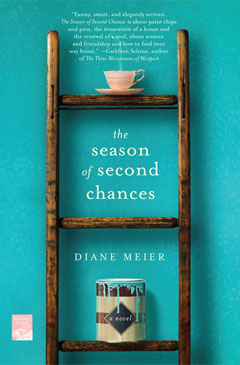
 . Known for her book about the changing customs in modern marriage ceremonies, The New American Wedding, and for her work in the field of marketing,
 at a slightly higher rank than recent release
  , most reviewers have unabashedly enjoyed
 . The title reminds me, of course, of the
 . He and his writing partner Jon Jefferson form the team known as
 I'll introduce you to the cast of characters:
 by Jen Lancaster (May 4, 2010): In Lancaster's fifth memoir, she examines the world that is reality television. She's the best funny lady in the memoir business, not to mention an excellent book title creator. I can almost guarantee that in addition to talking
  by Karen White (May 4, 2010): I went to Folly Field Beach a few weeks ago. Wrong Folly Beach, but right ocean (Folly Field is on Hilton Head Island, while Folly Beach is nearer to Charleston). Still, just visiting South Carolina and the Atlantic Ocean made me want to delve into this new release.
 by Carolyn Parkhurst (June 1, 2010): Parkhurst's
 by Dorothea Benton Frank (June 15, 2010): I've read every novel written by Frank, and I don't plan on stopping anytime soon. I'm glad she has slowly been returning to the scenes of her previous novels to write follow-ups. (This is the second which will follow Plantation, after last year's
  by Tori Spelling (June 15, 2010): I don't care what anyone says, I'm a Tori Spelling fan. I loved
  by Janet Evanovich (June 22, 2010): Sometimes Evanovich misses, but most of the time she's writing successes. No matter how good or just-okay this novel is, I can't wait to plunge back into the world of Stephanie Plum and friends. Especially Ranger. And Morelli, come to think of it. Okay -- Lula and Grandma Mazer rank pretty high as well. Jersey it is.
 by Tana French (July 13, 2010): French writes dark, deep literary mysteries. Her first two novels,
  by Kathy Reichs (August 24, 2010): That's right! The thirteenth book in my beloved Tempe series is due out this summer. Who knows what creepy bone capers Reichs will send her protagonist on in this latest
 by Michael Connelly (October 5, 2010): Michael Connelly is another one of those authors -- love him (even in person!) and have read everything he's written. The newest details a joint effort by both police detective Harry Bosch and his lawyer half-brother Mickey Haller.

 is the book


 or the more modern
  on an audio version. I'm not going to remember characters or follow an intricate plot. Therefore, my audio books have to be -- for the most part -- fluffy, action-driven mysteries or something similar.
 . It fit the bill in several ways. It offered characters that were interesting, a plot with lots of twists and turns (but none that were difficult to follow), and was light enough (literarily -- ha!) to allow me to understand it while listening rather than reading.
 , I must say I've now given it some thought. All that talk about meat in its original state turned my stomach. I mean, I find it difficult to eat chicken or beef that I've cooked, just remembering it so recently in its raw bloodiness. So I haven't given up on my eggs, milk, & cheese quite yet, but meat is the furthest thing from something I'm craving at the moment.
 was released and made into a major motion picture of the same name. Despite her new found fame and fortune,